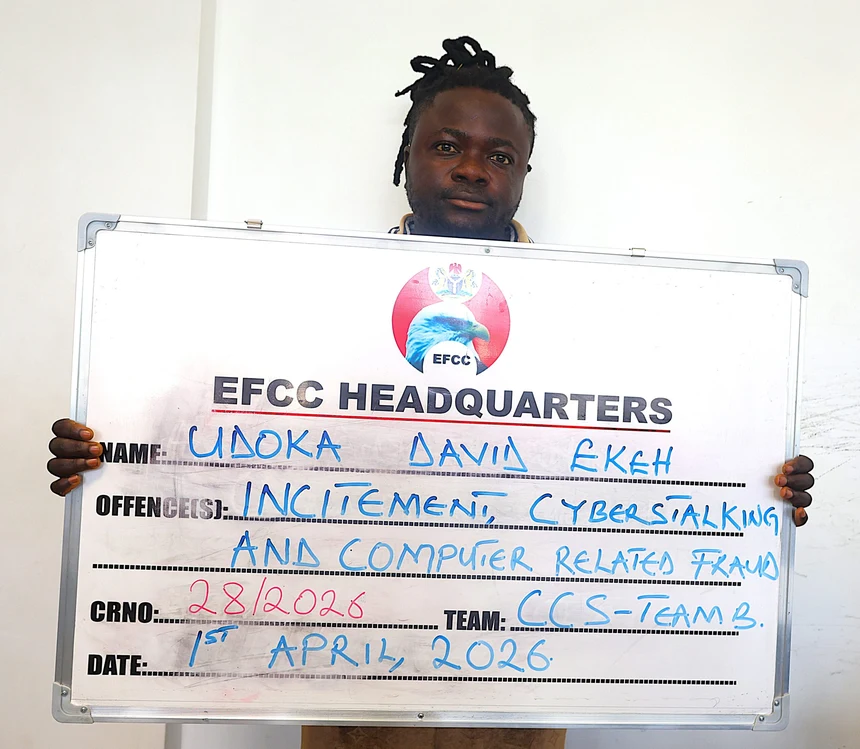
A TikTok user, Udoka David Ekeh, has been arrested over claims that operatives of the Economic and Financial Crimes Commission (EFCC) were kidnapped by bandits in Kwara State. The incident was said to have occurred in December 2025 during an assignment by the Ilorin Zonal Directorate of the agency. Ekeh alleged that the kidnappers demanded a large ransom before releasing the officers. EFCC spokesperson Dele Oyewale confirmed the arrest, stating that the claims were entirely false. He described the posts as deliberate misinformation meant to tarnish the agency's image. According to Oyewale, the TikTok content was fabricated and intended to incite the public against the commission's anti-fraud operations. Preliminary investigations revealed Ekeh also used a Facebook account under the name Garg Carta to run romance scams by posing as a foreigner. Oyewale said Ekeh would soon be charged in court.
Spreading hoaxes about security operations now goes hand in hand with running online scams, as Udoka David Ekeh's case shows. The arrest reveals how social media personas can manufacture crises to gain attention while profiting from deception. Since the EFCC confirmed the kidnapping claim was false, the real story is not about bandits but about the ease with which misinformation spreads under the guise of public service. For Nigerians, this blurs the line between genuine alerts and digital fraud, making trust harder to earn online.


