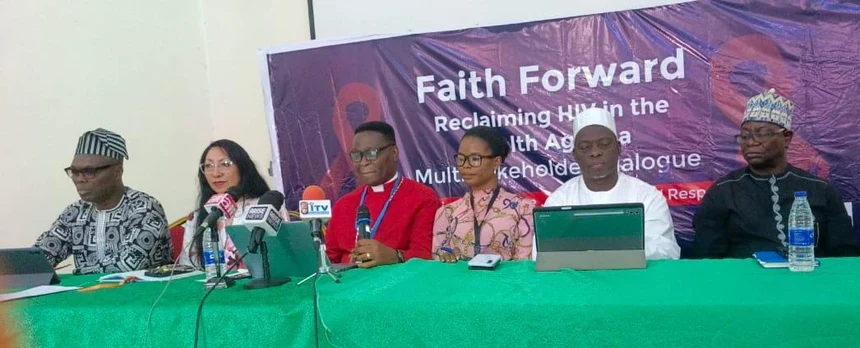
Stakeholders have demanded urgent measures to sustain the global HIV response, citing declining funding, rising stigma, and gaps in health systems as major threats to progress. Their call came in a communiqué issued on Wednesday after a three-day multi-stakeholder dialogue titled "Faith Forward: Reclaiming HIV in the Health Agenda" in Abuja. The event was organised by the World Council of Churches (WCC) in partnership with the Nigerian Network of Religious Leaders Living with or Personally Affected by HIV (NINERELA+). Rev. Benebo Fubara-Manuel, who read the communiqué, stated that 1.3 million new HIV infections are still recorded globally each year, despite scientific advances like long-acting injectables. He stressed that access to such innovations remains limited in low- and middle-income countries without urgent and equitable scale-up. Faith communities were acknowledged as key actors in reducing stigma and expanding access to HIV services. The communiqué urged governments to increase domestic financing, integrate HIV care into primary health systems, and protect human rights. It also called on development partners and the private sector to maintain funding and technical support. Imam Fuad Adeyemi urged religious leaders to promote compassion and eliminate stigma, while Oluchi Ndubuisi of the International Community of Women Living with HIV West Africa warned that reduced funding could reverse progress. Gracia Ross, WCC's Programme Executive for HIV, Reproductive Health, and Pandemics, described the global HIV response as being in crisis due to shrinking international support.
The fact that faith leaders are now central to Nigeria's HIV response reveals how deeply public health gaps have been filled by non-state actors. With Gracia Ross stating external funding is shrinking, the burden increasingly falls on domestic budgets and moral persuasion rather than structured healthcare investment. If Nigeria cannot fund its HIV programmes without relying on dwindling foreign aid, the promise of ending AIDS as a public health threat will remain rhetorical. The real test is whether federal and state governments will step up financing—or keep depending on sermons to do the state's job.