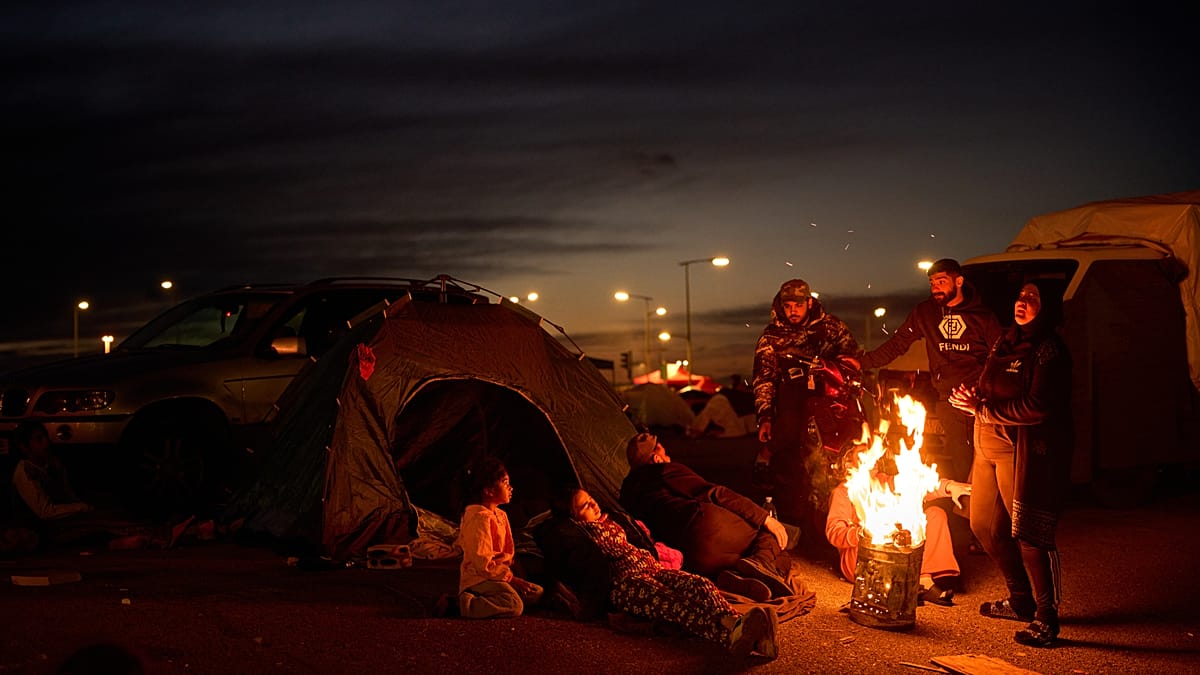
Thousands of displaced Lebanese are struggling to survive in squalid conditions along Beirut's waterfront, where makeshift tents offer little respite from the elements. The living conditions are dire, with families forced to sleep on pavements without access to basic necessities like water and sanitation. The crisis was sparked by the escalation of fighting between Hezbollah militants and Israel, which has left a trail of destruction in its wake. Entire villages have been devastated, and the infrastructure is severely damaged, making it unclear when or if displaced families can return home.
The situation is further complicated by the lack of official support, with most aid coming from individual initiatives or community campaigns. Displaced people are struggling to access basic necessities like food, cleaning materials, and sanitation facilities. The absence of clean water and inadequate sanitation pose significant health risks, with cases of scabies and lice outbreaks a growing concern. As the situation continues to deteriorate, families are shifting their priorities from waiting for the war to end to finding ways to survive one more day.
A significant number of displaced people have fled from the south and the Bekaa Valley, with the bulk of aid reaching them coming from grassroots efforts. The scale of the crisis is staggering, with over a million Lebanese citizens displaced according to the UN's International Organisation for Migration agency.
The scale of human suffering in Lebanon is a stark reminder of the devastating consequences of conflict. The absence of official support and the reliance on individual initiatives to provide aid is a stark indictment of the state's failure to respond to the crisis. The focus has shifted from waiting for the war to end to finding ways to survive, highlighting the dire need for immediate action to address the humanitarian crisis.