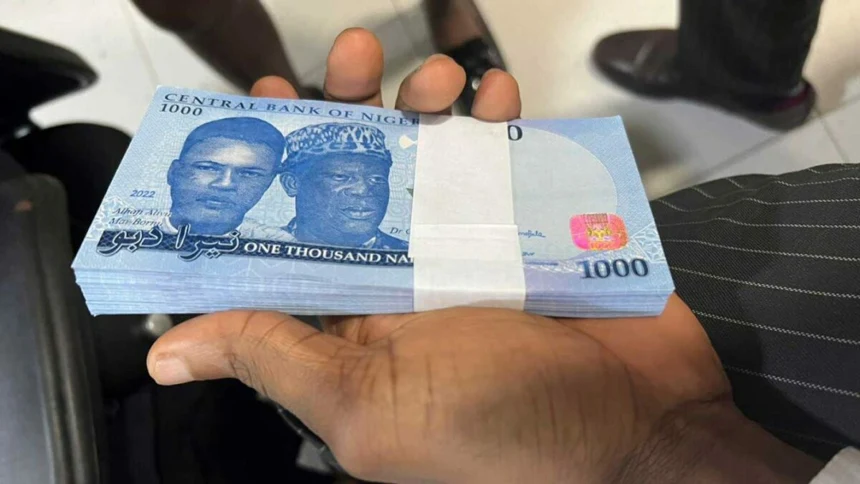
The naira depreciated slightly against the US dollar at the official foreign exchange market on Friday, closing at N1,362.21/$ compared to N1,358.75/$ in the previous session. The Central Bank of Nigeria (CBN) reported the movement in its daily market data, showing the currency traded between N1,360 and N1,366 to the dollar during the session. Demand for foreign currency exceeded available supply, contributing to the decline in the local currency's value.
Trading volume at the Nigerian Foreign Exchange Market (NFEM) dropped significantly, with total turnover falling to $73.57 million across 90 transactions. This marked a decline of more than 37 per cent from the $128.17 million traded in the prior session. Analysts linked the reduced activity to lower dollar inflows from foreign portfolio investors, whose engagement in Nigeria's money market remains limited. The absence of recent Open Market Operations (OMO) auctions also dampened demand for naira-denominated assets.
Despite the naira's performance, Nigeria's gross external reserves exceeded $50 billion, the highest since the start of the current forex reforms. The reserve build-up is attributed to inflows from crude oil exports, diaspora remittances, and other foreign exchange sources. Financial analysts said the rising reserves could reach $51 billion by the end of June, assuming no major debt service payments arise. They added that stronger reserves may improve the CBN's ability to stabilise the exchange rate and attract investor confidence.
The CBN reports rising external reserves even as the naira weakens and forex liquidity shrinks at the official market. Reserves are above $50 billion, yet only $73.57 million was traded on Friday—less than 0.15% of reserves. This suggests most forex inflows are not reaching the official market or are being held offshore. Nigerians relying on official channels for dollars continue to face scarcity despite record reserves.
Editorial note: AI-assisted opinion, not established fact. Full disclaimer →