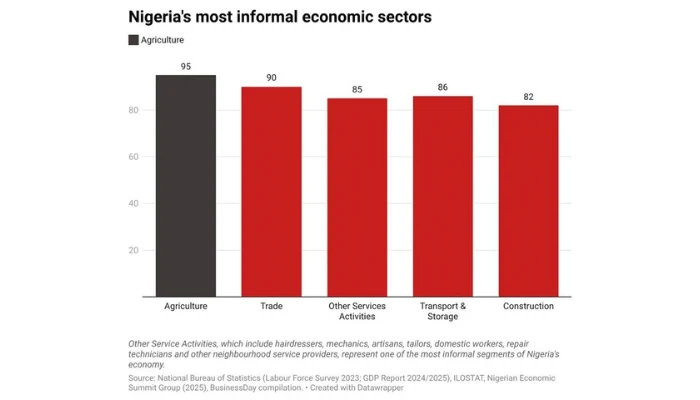
A National Bureau of Statistics Labour Force Survey shows that 92.93 percent of employed Nigerians were in the informal economy in 2023. The Nigerian Economic Summit Group's 2025 report arrives at a similar estimate of 93 percent, confirming that the vast majority of the labour force operates outside formal institutions.
Over the past three years the government has rolled out an ambitious reform agenda, removing fuel subsidies, liberalising the exchange rate, raising electricity tariffs, hiking interest rates to historic levels and introducing new tax laws. Yet the benefits of these measures have filtered to households far more slowly than the costs have been felt. Because most workers lack formal employment ties, policies such as minimum‑wage increases, bank‑linked credit and corporate tax changes affect only a small slice of
The fact that 93% of Nigerian workers operate in the informal economy means most government reforms—like tax changes, minimum wage hikes and credit policies—affect only a small fraction of the workforce, explaining why economic improvements take so long to reach households. This disconnect matters because it undermines the effectiveness of monetary and fiscal policy, leaving the Central Bank and tax authorities unable to reach the very people who form the backbone of the country's economic activity.
Editorial note: AI-assisted opinion, not established fact. Full disclaimer →


