Makoko Residents Face Uncertain Future as Lagos Government's Power to Seize Comes Under Scrutiny
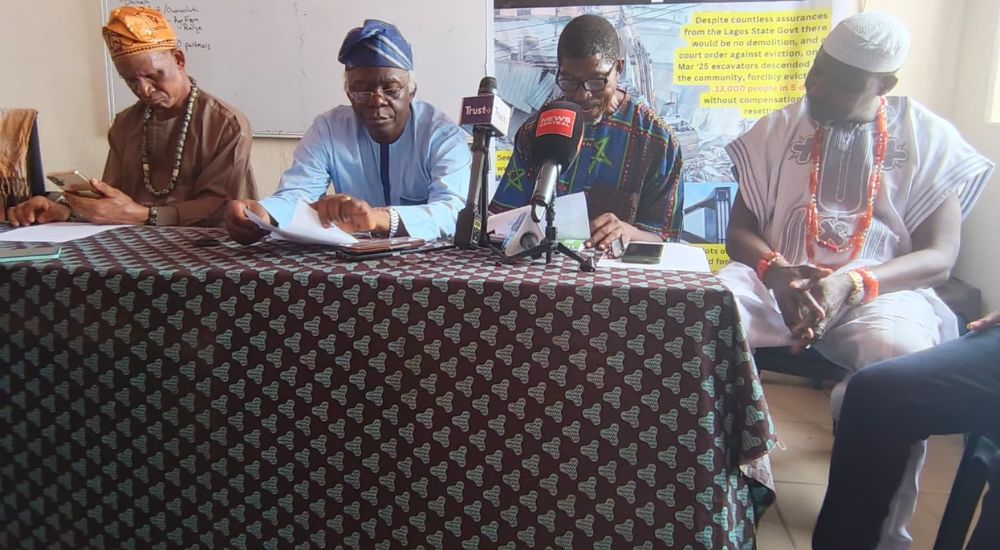
Human rights lawyer Femi Falana has sounded a warning that the Lagos State Government lacks the legal authority to seize Makoko or other waterfront communities and hand them over to wealthy individuals. This warning was made at a press conference organised by the Coalition Against Demolition, Forced Eviction, Landgrabbing and Displacement in Lagos State. Falana argues that the right to housing is enshrined in the Nigerian Constitution and the African Charter on Human and Peoples' Rights, making it impossible for any government to render citizens homeless.
Falana points out that when the government acquires land or property for a genuine public purpose, it must provide fair compensation and alternative accommodation for affected residents to prevent displacement. He cites several judgments from domestic and regional courts that have made it clear that no community should be displaced without prior consultation and due process. In some cases, demolition exercises have been carried out at night while residents were asleep, with security operatives reportedly firing tear gas to disperse people.
The senior lawyer has called for immediate compliance with judgments from the Lagos State High Court, the Federal High Court, and the ECOWAS Court of Justice in Abuja, which have ruled in favour of waterfront communities. Falana is also demanding that the government be held accountable for the destruction of schools and medical centres during the demolitions, which have worsened the plight of displaced families and forced many children out of school.
The Lagos State Government's actions in Makoko and other waterfront communities are a stark reminder of the ongoing struggle for the rights of the poor and vulnerable in Nigeria. Femi Falana's warning that the government lacks the power to seize these communities is a call to action for the authorities to respect the rule of law and the rights of citizens. The destruction of homes and livelihoods in Makoko and other areas has far-reaching consequences for the families affected, including loss of income, displacement, and disruption of education. The government must be held accountable for its actions and comply with the judgments of the courts to prevent further suffering of the affected communities.