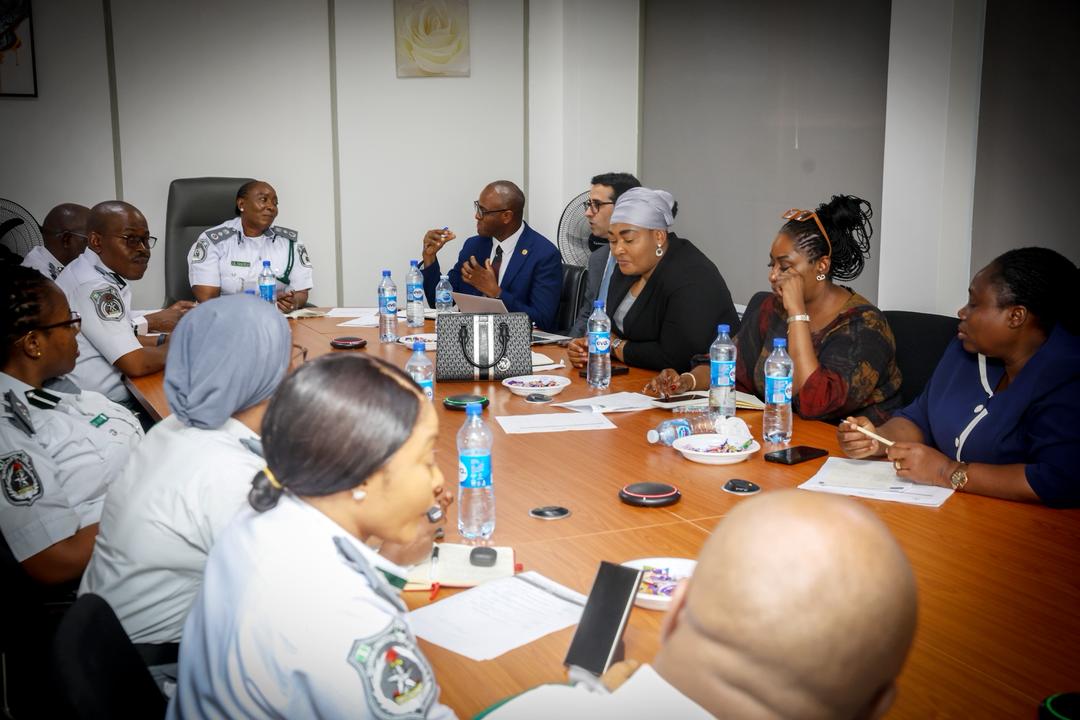
Nigeria has been chosen as the pilot country for the implementation of the Simplified Trade Regime (STR) under the African Continental Free Trade Area (AfCFTA). This development was announced recently by a delegation from the AfCFTA secretariat led by Pedro Estevao, who met with the Nigeria Customs Service (NCS) in Abuja. The NCS's spokesperson, Abdullahi Maiwada, disclosed this in a statement. Nigeria's selection as the pilot country is attributed to its strategic position as the largest market in the region, which makes it well-suited to drive inclusive trade and regional economic growth.
The NCS presented its draft Standard Operating Procedure (SOP) for implementing the STR in Nigeria during the engagement. The draft SOP outlines simplified customs procedures covering informal cross-border trade, passenger baggage, and low-value e-commerce transactions, supported by digital declaration systems and risk-based controls. Key areas of convergence between the NCS's draft SOP and the AfCFTA framework were identified, including the simplification of documentation and procedures, the use of digital platforms for declaration and clearance, and the adoption of de minimis thresholds for low-value trade.
Both parties agreed on the need for sustained technical engagement to refine implementation strategies, address operational challenges, and ensure alignment between national and continental frameworks. This engagement marked a significant step toward positioning Nigeria as a pilot country for the implementation of the STR under the AfCFTA.
The Nigeria Customs Service's commitment to facilitating trade and supporting Micro, Small, and Medium Enterprises (MSMEs) through simplified and transparent customs processes is a welcome development. With Nigeria's strategic position as the largest market in the region, the implementation of the Simplified Trade Regime under the AfCFTA has the potential to drive inclusive trade and regional economic growth. The success of this initiative will depend on the effective alignment of national and continental frameworks, as well as the ability to address operational challenges. If implemented successfully, this could lead to increased economic activity and job creation for small-scale traders, particularly women and MSMEs. The Nigeria Customs Service must ensure that the implementation of the STR is transparent, efficient, and inclusive to reap its full benefits.