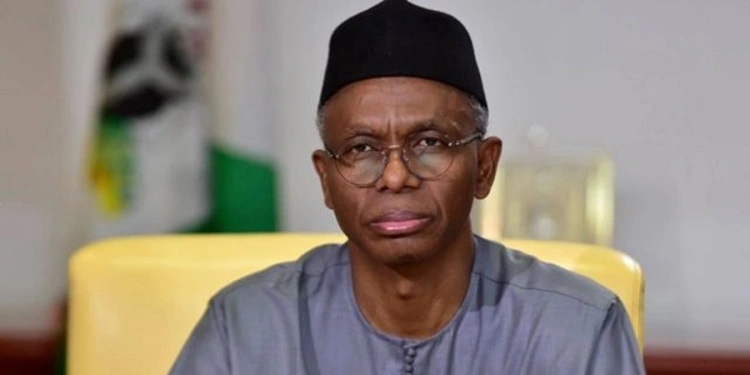
Former Kaduna State Governor Nasir El-Rufai arrived at the Federal High Court in Kaduna on Tuesday morning to face allegations of money laundering. The arraignment followed a previous announcement by the Independent Corrupt Practices and Other Related Offences Commission (ICPC) that El-Rufai would be docked before the court on March 24, 2026. Multiple charges have been filed against the former governor, including conversion and possession of public property, money laundering, abuse of office, fraud, intent to commit fraud, and conferring undue advantage.
The charges, filed under suit number FHC/KD/73/2026, are a result of an investigation by the ICPC. Security presence was heightened around the court premises ahead of the proceedings, with operatives from various agencies deployed to strategic locations. Heavy security checks were conducted at the court, located within the old Nigerian Defence Academy area, starting as early as 7 a.m.
The increased security measures affected vehicular movement in the area, with motorists restricted to a single lane from the Ungwan Sarki axis through Kawo. This resulted in early morning traffic congestion and delays. The trial is expected to commence with the formal reading of charges and the defendant's plea, marking the beginning of what could be a closely watched legal battle involving the former governor.
The trial of Nasir El-Rufai is a significant moment in Nigeria's anti-corruption drive. As the former governor faces multiple charges, it is crucial that the courts uphold the rule of law and ensure that justice is served. The ICPC's efforts to hold public officials accountable for their actions are a step in the right direction, but it is equally important that the judiciary delivers a verdict that reflects the gravity of the allegations. The outcome of this trial will have far-reaching implications for Nigeria's fight against corruption and its impact on the lives of ordinary citizens.