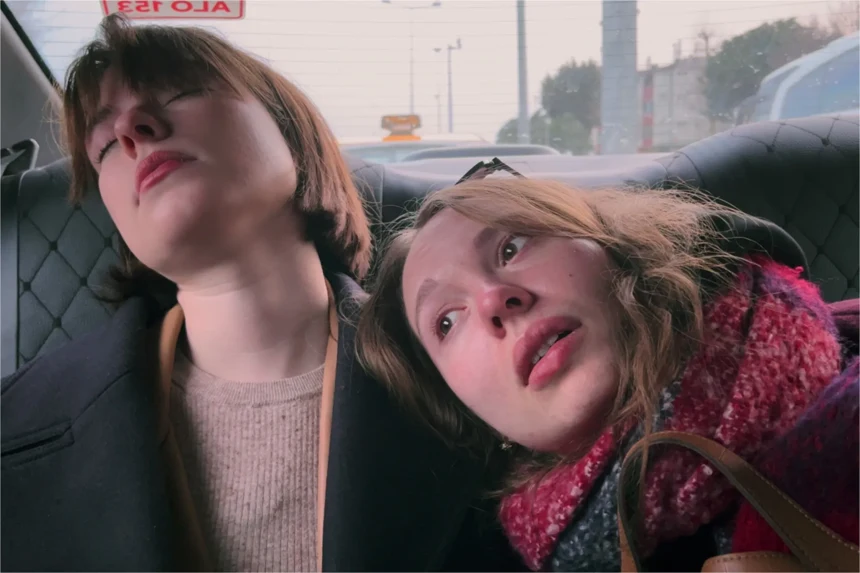
Julia Loktev's documentary "My Undesirable Friends: Part 2 — Exile" has premiered at the Venice Film Festival, continuing the story of independent Russian journalists after the 2022 invasion of Ukraine. The film follows the aftermath of the Kremlin's crackdown on press freedom, focusing on staff from the independent station TV Rain, declared an "undesirable organization," who fled Russia within hours of learning of an impending police raid. The sequel, screening out of competition in the Venice Open strand, spans over four and a half years and captures the emotional toll of exile as the journalists rebuild their lives across Istanbul, Amsterdam, Prague and New York.
The first part of Loktev's project, "Last Air In Moscow," chronicled the final months of press freedom in Russia before the Ukraine war. The second chapter picks up just two days later, documenting sudden displacement and uncertainty. Based in New York and born in the former Soviet Union, Loktev began filming five years ago intending to profile journalists labeled "foreign agents." The project evolved far beyond its original scope, now expected to span 10 chapters and nearly 12 hours. "It's a much more emotional story," Loktev said in an interview, noting the extended timeline and deeper personal stakes. The film includes footage from multiple locations as subjects navigate life in exile, with Part 2 screening at Venice with an intermission due to its length.
The sequel's extended timeline contrasts sharply with the abrupt collapse of press freedom it documents, revealing how prolonged exile follows a near-instant erasure of free press in Russia. This shift from real-time crisis to drawn-out displacement underscores the personal cost of political repression for journalists who lost careers, homes and stability overnight. Loktev's own background as a Soviet-born emigrant adds a quiet layer of resonance, though the film never positions her as a central figure. The decision to expand the project into a near-12-hour epic suggests the story's weight has overtaken its original frame, becoming a living archive of forced migration among media workers.
Editorial note: AI-assisted opinion, not established fact. Full disclaimer →