Trump says Iran has been ‘literally obliterated’ as he presses allies to help reopen Hormuz
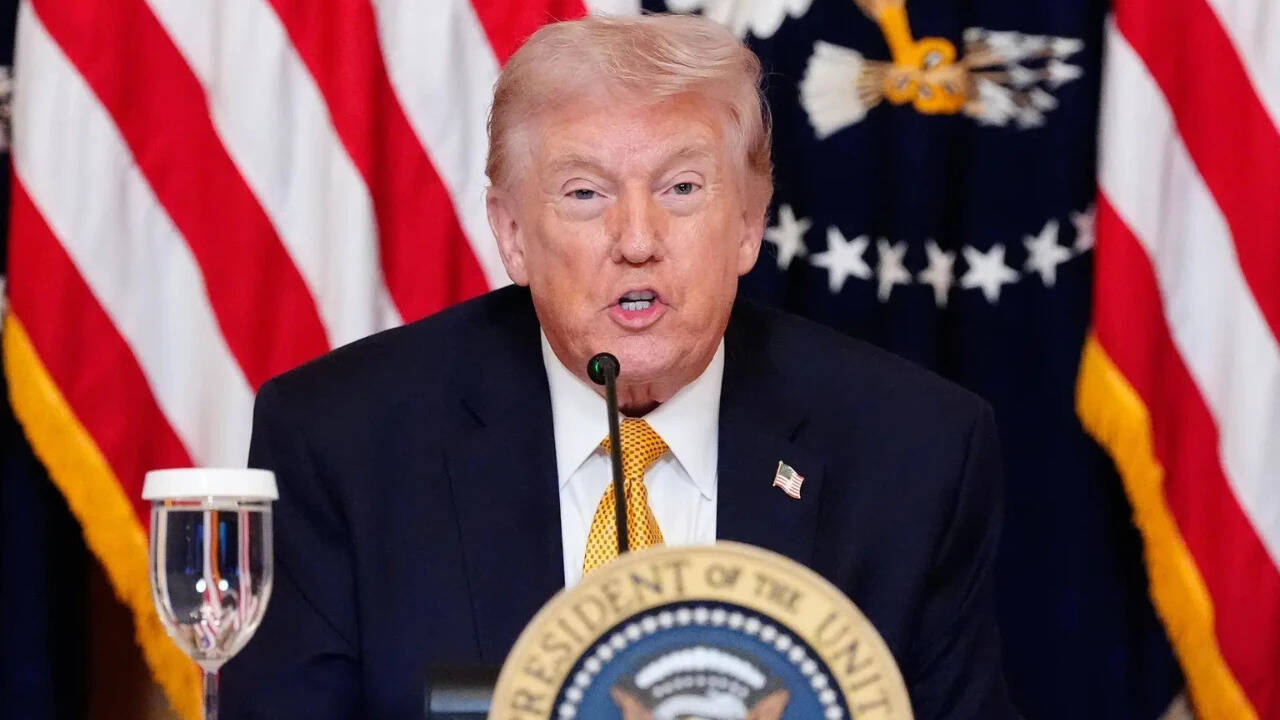
File photo: Donald Trump
Trump claims over 7,000 US strikes, sharp drop in Iranian attacks
Kharg Island strike claim and warning on Iranian oil infrastructure
“We didn’t want to do that, but we will do that... But for purposes of someday rebuilding that country, I guess we did the right thing,” he added.
Tehran has accused the United States, without evidence, of using “ports, docks and hideouts” in the United Arab Emirates to launch strikes on Kharg Island.
Trump says Strait of Hormuz is in ‘very good shape’ but asks other countries to ‘come and help us’
Despite his claims of battlefield success, Trump said the Strait of Hormuz — the strategic waterway through which roughly a fifth of the world’s traded oil normally flows — remains vulnerable because of its narrow geography and Iran’s ability to launch short-range attacks.
“We have it (Strait of Hormuz) in very good shape. We’ve already taken care of Iran, but now, because of the fact that literally a single terrorist can shoot a missile, and it’s fairly close range, because it is a tight area... Iran has always used that as an economic weapon,” Trump said.
“It’s not going to be able to be used very long. Numerous countries have told me they’re on the way. Some are very enthusiastic about it, and some are countries that we’ve helped for many, many years,” he added.
Earlier, Trump said he wanted countries that rely on Gulf oil flows to step up.
“Come and help us with the Strait,” he said, according to CBS News, while adding that he would not specify which nations had agreed to assist.
Trump’s comments came as the US continues trying to assemble a coalition to protect shipping through the waterway after Iranian strikes and mining threats effectively disrupted tanker traffic.
Allies respond coolly to Trump’s call for naval support
But Trump’s appeal has so far met a cautious — and in some cases outright negative — response from allies.
American allies around the world have responded coolly or rebuffed Trump’s call to send warships to escort merchant vessels through the Persian Gulf, reflecting strain in Washington’s alliance relationships after the US and Israel launched the war without broad prior consultation.
The sharpest refusal came from Germany, where defence minister Boris Pistorius said, “This is not our war; we did not start it,” according to the New York Times.
Japan, Italy and Australia signalled on Monday that they would not participate in efforts to reopen the Strait of Hormuz, while France, South Korea and Britain were more non-committal.
In London, Prime Minister
Keir Starmer
said Britain would not be “drawn into wider war”, while still working with allies on what he called a “viable collective plan” to restore freedom of navigation in the strait.
Starmer said Britain is discussing with the US and partners in Europe and the Gulf whether to use mine-hunting drones already stationed in the region, but signalled the UK is unlikely to send a warship.
Italy also showed reluctance. Foreign minister Antonio Tajani said Rome supports reinforcing EU naval missions in the Red Sea, but added, “I don’t think these missions can be expanded to include the Strait of Hormuz.”
Trump has also publicly warned that a lack of allied support could damage the alliance.
He told the Financial Times on Sunday that if Nato members refused or gave a negative response, “it will be very bad for the future of Nato.”
Source: Original Article • AI-enhanced version for clarity & Nigerian context


