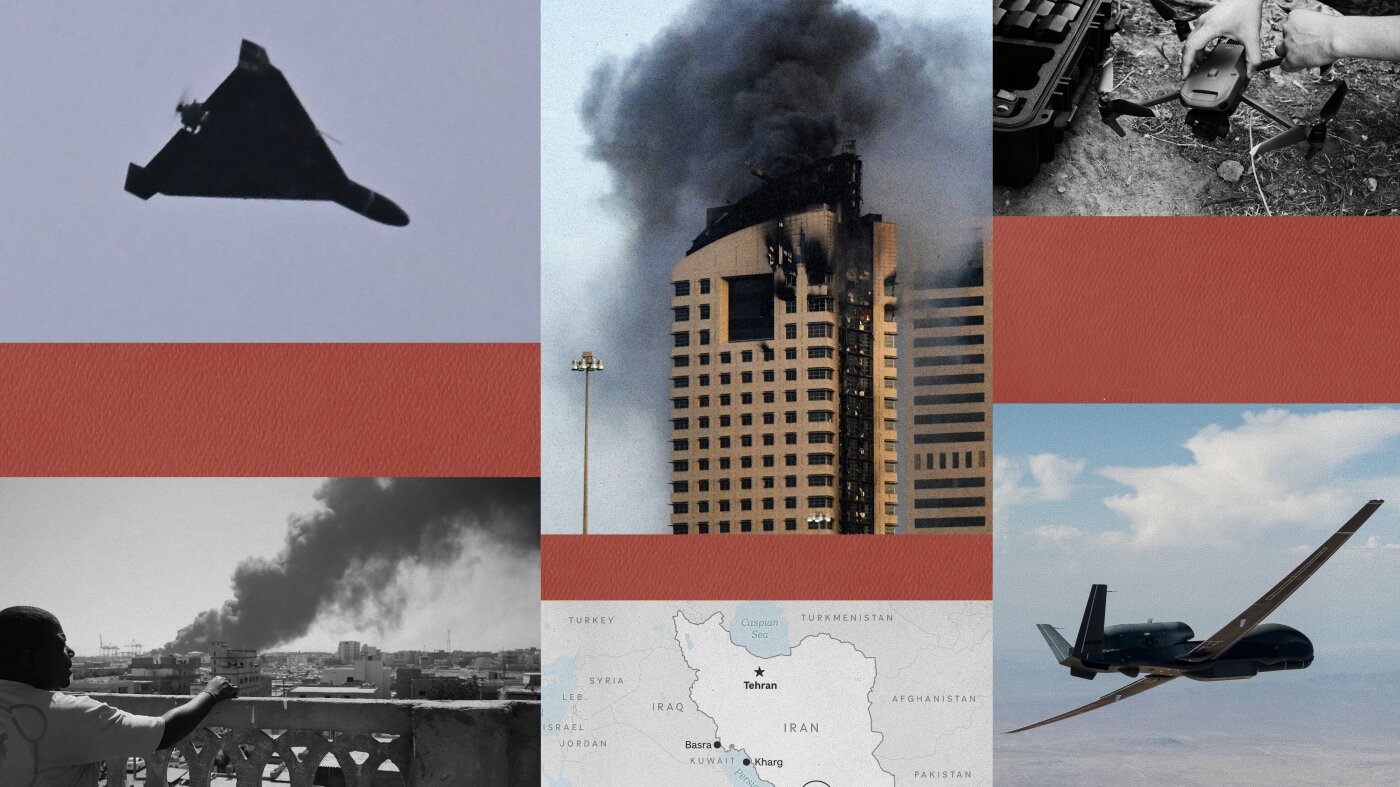
‘US distraction in the Middle East is in China’s interest’

**US Distraction in the Middle East: A Boon for China's Interests**
The ongoing conflict in the Middle East has become a major concern for the global community. However, for China, this situation presents an opportunity rather than a threat. According to Andy Mok, a professor at the Beijing Foreign Studies University, the US distraction in the Middle East is, in fact, in China's interest.
The Middle East has long been a region of strategic importance, with many countries vying for influence and control. The US, in particular, has maintained a significant presence in the region, with military bases and interests that have been a cornerstone of its foreign policy. However, in recent years, the US has been increasingly preoccupied with other regions, such as Eastern Europe and the Asia-Pacific.
Mok argues that this distraction has created a window of opportunity for China to increase its influence in the region. China has been actively pursuing its Belt and Road Initiative (BRI), a massive infrastructure development project aimed at connecting China with other parts of Asia, Europe, and Africa. The Middle East is a crucial cog in this wheel, with many countries along the BRI route.
China's growing presence in the Middle East is not without precedent. The country has already made significant investments in countries such as Saudi Arabia, the United Arab Emirates, and Egypt. China has also established strong trade relationships with these countries, which have become major suppliers of oil and natural gas to China.
Furthermore, China's involvement in the Middle East is not limited to economic interests. The country has also been actively engaging in diplomatic efforts, participating in international organizations such as the Organization of Islamic Cooperation (OIC). This has helped China to build relationships with key players in the region and to project its influence in a region where the US is increasingly distracted.
For Nigeria, this development is particularly interesting. As a major oil-producing country, Nigeria has long been dependent on Western countries, particularly the US and UK, for trade and investment. However, with China's growing presence in the Middle East, Nigeria may find itself with a new partner and ally in the region.
While some may view China's growing influence in the Middle East as a threat to US interests, Mok argues that it is, in fact, a natural consequence of the US's distraction. As the US continues to focus on other regions, China will continue to fill the power vacuum, securing its interests and expanding its influence in the Middle East.
Source: Original Article • AI-enhanced version for clarity & Nigerian context