African Guernica Exhibition Challenges Western Art Paradigms
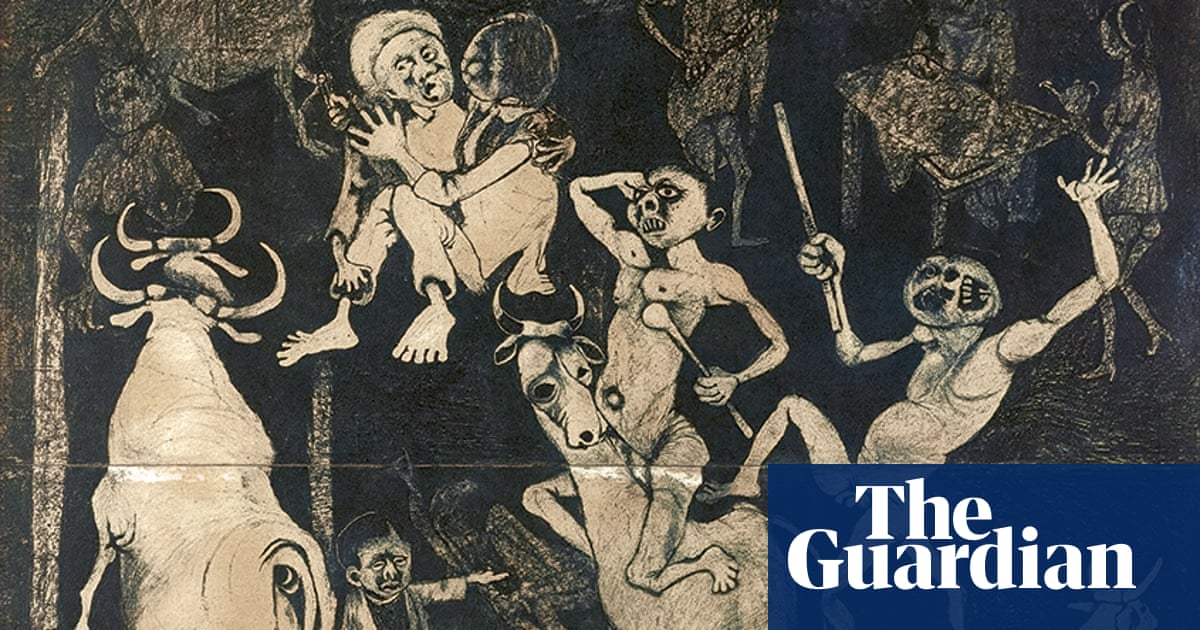
A powerful piece of art, African Guernica, has been unveiled at the Reina Sofía museum in Madrid, Spain, alongside Picasso's masterpiece, Guernica. The drawing, created by South African artist Dumile Feni in 1967, is a haunting representation of the brutality of apartheid, with its dark and disturbing imagery. While Picasso's Guernica responds to the horrors of war, Feni's work tackles the slow and insidious violence of racist tyranny.
The exhibition, part of the museum's new series, History Doesn't Repeat Itself, But It Does Rhyme, aims to challenge traditional Western art biases by showcasing works from diverse cultural and geographical backgrounds. By placing African Guernica opposite Picasso's canvas, the museum seeks to offer fresh perspectives on the famous work and correct long-standing prejudices that have relegated African art to secondary status.
The exhibition also highlights the significant influence of African art on European modernism, with experts noting that Picasso's cubist innovations were, in part, inspired by African sculptural practices. However, the curator, Tamar Garb, emphasizes that the exhibition is not about influence, but rather about dialogue and the complex relationships between different art forms.
African Guernica, on loan from the University of Fort Hare, has never been exhibited outside South Africa before, offering a compelling opportunity to reevaluate Feni's unique place in 20th-century art. The artist's work, which blends traditional African cosmologies with modernist techniques, challenges simplistic comparisons with Picasso and instead occupies a distinctive position in the art historical canon.
The exhibition will continue to run at the Reina Sofía museum, offering visitors a chance to engage with the complex themes and artistic innovations on display.
The exhibition of African Guernica alongside Picasso's Guernica serves as a powerful reminder of the need to challenge Western art paradigms and acknowledge the significant contributions of African artists to the global art canon. By highlighting the complex relationships between different art forms, the exhibition encourages a more nuanced understanding of the artistic innovations of the 20th century. The inclusion of African Guernica in this exhibition is a significant step towards correcting the historical biases that have relegated African art to secondary status. This exhibition is a testament to the enduring power of art to challenge and subvert dominant narratives.