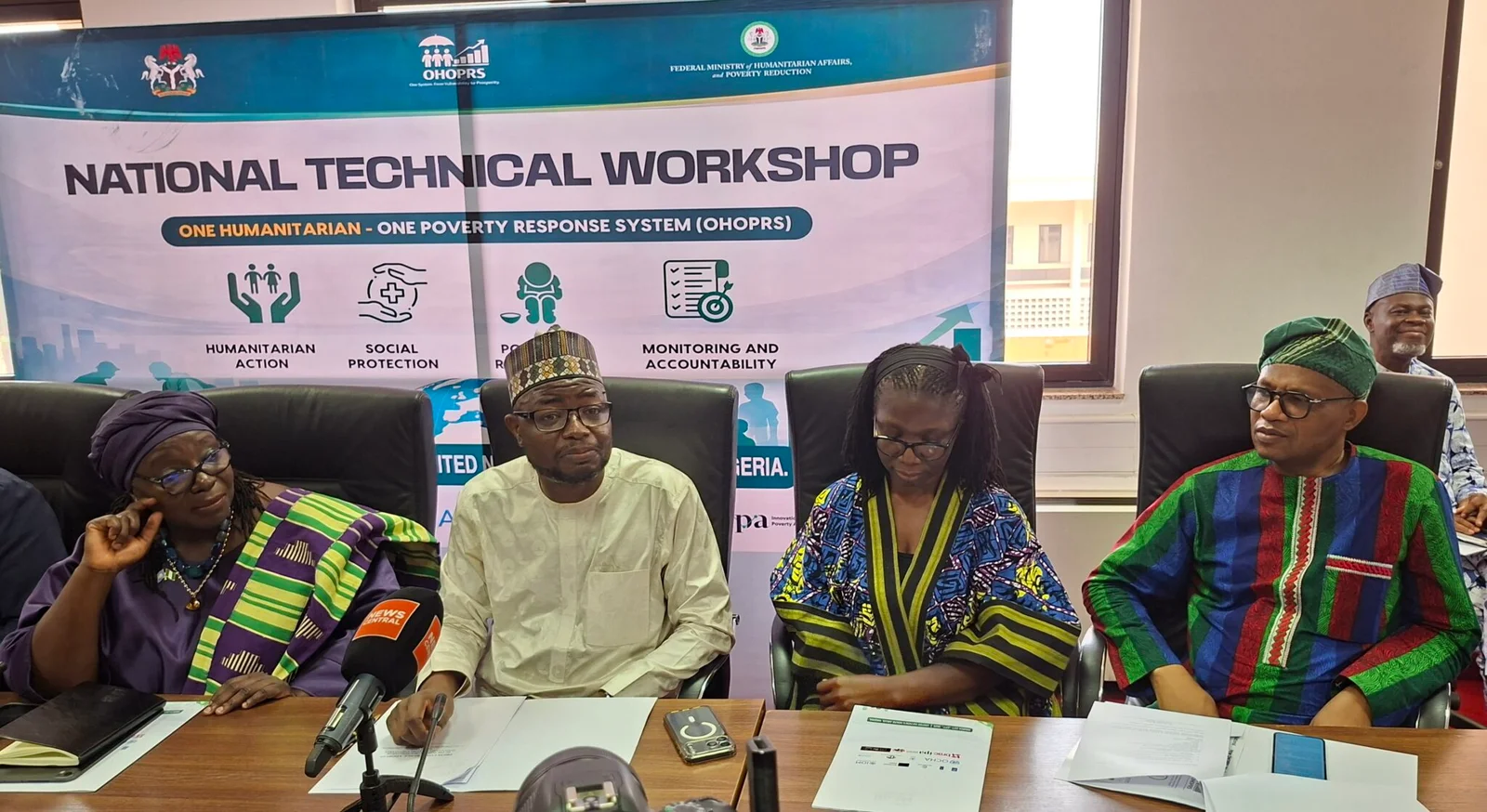
Stakeholders Seek Collective Action to Tackle Poverty in Nigeria
A unified framework to combat poverty in Nigeria is set to take shape as stakeholders converge to operationalise the One Humanitarian–One Poverty Response System (OHOPRS). The Federal Government, United Nations agencies, and other partners are pushing for stronger collaboration among stakeholders to effectively implement the OHOPRS. The framework, inaugurated earlier by stakeholders, aims to harmonise efforts and eliminate duplication in poverty reduction programmes.
The National Technical Workshop on OHOPRS for humanitarian stakeholders, which concluded in Abuja, marked a defining moment in Nigeria's journey toward reforming humanitarian interventions and reducing poverty. Dr Bernard Doro, Minister of Humanitarian Affairs and Poverty Reduction, stressed the importance of synergy in implementing the OHOPRS. The framework, he noted, was designed to address the fragmentation of humanitarian response and poverty reduction efforts in the country.
Nigeria's humanitarian systems have been plagued by duplication, lack of synergy, and persistent vulnerability across communities. The OHOPRS aims to achieve five fundamental shifts, including a unified national system, a single integrated national registry architecture, and a pooled and accountable financing framework. The framework will also track every citizen's journey, identifying vulnerable individuals and guiding them toward self-reliance.
The Federal Government is committed to ending poverty in Nigeria, moving from helping citizens survive to enabling them to thrive. Collective commitment and alignment of all stakeholders are required to achieve this goal.
The Federal Government's renewed commitment to ending poverty in Nigeria is a welcome development. The operationalisation of the OHOPRS framework holds the key to achieving this goal. However, the success of this initiative relies heavily on the collective commitment of all stakeholders, including ministries, departments, and agencies, state governments, and development partners.