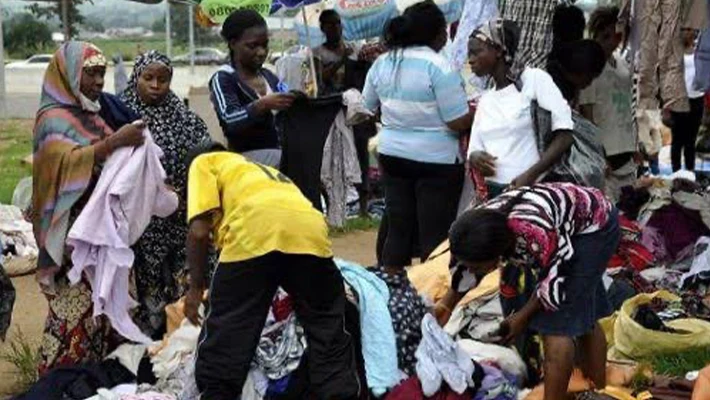
Second-hand clothes prices in Dutse, Jigawa, have doubled in recent weeks due to increased transport costs tied to fuel price hikes. Retailers say they are passing on higher overheads to customers to sustain their businesses. Danladi Musa, a retailer, said fairly used children's clothes now sell for between N1,000 and N1,500, up from N500 to N800. Adult shirts have risen from N1,500 to N3,500, while trousers now cost N6,000, up from N3,000. A pair of jeans that previously sold for N2,500 now goes for between N4,500 and N7,000, according to trader Sani Balarabe. He said most second-hand clothes are sourced from Kano, and transportation costs have significantly driven up prices. Some retailers either buy directly from Kano or through intermediaries from that city. Balarabe noted that sales have dropped, with some traders returning home with little or no income after a full day at the market. He said business was usually stronger during the cold season but is now struggling. Another customer, Asma'u Abdulkadir, said she continues to buy second-hand clothes despite the high prices because her children wear them out quickly. She combines second-hand and new clothes to manage household expenses. Mohammed Auwal said many people now prioritize food and other essentials over clothing due to economic pressures. He added that low-income families still depend on second-hand clothes because new clothing is unaffordable. Thrift clothes, commonly called Okrika, are imported from Europe, America, and Asia and remain popular for durability, affordability, and style. The trade supports many Nigerians, but rising costs are making it less profitable for retailers and more expensive for buyers.
Danladi Musa says rising transport costs are forcing higher prices, yet he still expects customers to absorb the increases even as sales drop. Sani Balarabe admits a day's earnings often fail to cover basic household needs, exposing a cycle where traders raise prices to survive but sell less. The same economic pressure that pushes prices up also reduces what poor families can spend, trapping both buyers and sellers. This shift undermines the affordability that made second-hand clothes a staple for low-income Nigerians.
💡 NaijaBuzz Take is AI-assisted editorial opinion, not established fact. Full disclaimer →