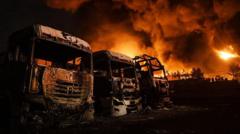
Oil soars past $100 a barrel amid Iran war

**Oil Prices Soar Above N150,000 Per Barrel Amid Global Tensions**
The global crude oil price has surged past N150,000 per barrel, with Brent crude, the international benchmark, rising by as much as 20 percent. This significant increase is largely attributed to the ongoing conflict between the United States, Israel, and Iran.
The price hike has sparked concerns about the disruption to global energy supplies, particularly given Iran's decision to halt shipping in the Strait of Hormuz. This strategic waterway is responsible for approximately one-fifth of the world's oil supply, and its closure is expected to have far-reaching consequences.
In Nigeria, where oil is a major contributor to the economy, this development could have significant implications for the country. The Nigerian government relies heavily on oil revenue to fund its activities, and any disruption to global oil supplies could impact the country's economic stability.
The United States and Israel's decision to launch joint strikes on Iran has led to a surge in oil prices. The attacks have resulted in the effective closure of the Strait of Hormuz, leading to a buildup of oil barrels that have nowhere to go. This, coupled with attacks on energy production facilities in the region, has further threatened oil supplies.
The Organization of the Petroleum Exporting Countries (OPEC), a cartel of major oil-producing nations, has seen its members - Iraq, the United Arab Emirates, and Kuwait - cut production in response to the crisis. This has added to the pressure on global oil supplies.
While some officials have downplayed the prospect of rising energy prices, the impact is already being felt. The increase in oil prices could lead to higher petrol prices at the pump, which could have a significant impact on consumers.
In Nigeria, the price of petrol is already a major concern, and any further increase could exacerbate the issue. The government may need to consider measures to mitigate the impact of rising oil prices, such as implementing price controls or subsidies.
The situation remains fluid, and it is unclear how events will unfold. However, one thing is certain: the conflict between the United States, Israel, and Iran has significant implications for global oil supplies, and Nigeria will not be immune to its effects.
Source: Original Article • AI-enhanced version for clarity & Nigerian context