Oil prices surge above $100 and shares slide over Iran war
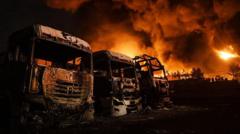
**Oil Prices Soar, Share Prices Fall as Tensions Escalate Amid Iran Conflict**
The world of international finance has been caught in a whirlwind of uncertainty following the recent escalation of tensions between Iran and the global community. The crisis has led to a significant surge in oil prices, which have surpassed the $100 mark for the first time in recent history. This development has sent shockwaves across the globe, with far-reaching implications for economies and markets.
As the situation in the Strait of Hormuz continues to unfold, investors are bracing themselves for the worst. The Strait is a critical waterway that connects the Persian Gulf to the Arabian Sea, and any disruption to oil shipments can have severe consequences for the global economy. If the shutdown in the Strait persists until the end of March, some analysts predict that oil prices could skyrocket to a record high of $150 per barrel.
This development has sent share prices tumbling, as investors worry about the potential impact on their investments. The uncertainty surrounding the conflict has created a climate of fear, with many market players taking a cautious stance. The situation is particularly concerning for countries like Nigeria, which relies heavily on oil exports to drive its economy.
In our own backyard, the implications of a prolonged oil price surge are dire. A significant increase in oil prices could lead to a sharp rise in the cost of living, making everyday essentials more expensive for ordinary Nigerians. This could have far-reaching consequences for the country's economy, particularly for low-income households that are already struggling to make ends meet.
The global economy is also likely to feel the pinch, with many countries heavily reliant on oil imports. The consequences could be severe, with some experts predicting a recession or even a depression. While it is difficult to predict the exact outcome, one thing is certain: the current situation is a wake-up call for policymakers to take a closer look at their energy security strategies.
As the situation continues to unfold, one thing is clear: the world is holding its breath, waiting to see how events will play out. The question on everyone's lips is: where does this go from here? Will tensions escalate further, or will a negotiated settlement be reached? Only time will tell, but one thing is certain: the world is bracing itself for a bumpy ride.
Source: Original Article • AI-enhanced version for clarity & Nigerian context