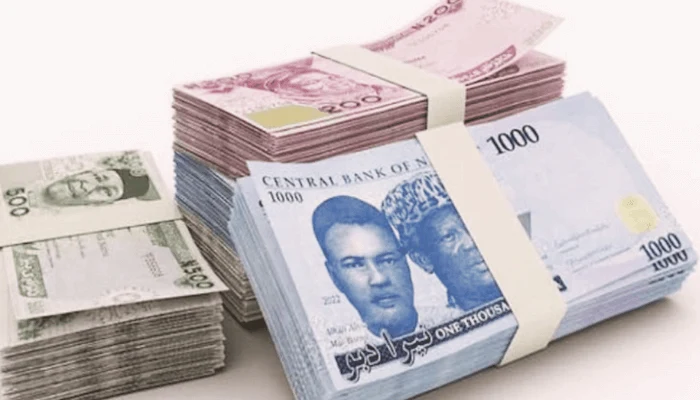
The naira appreciated to N1,357.26 per dollar on Wednesday in the official foreign exchange market, marking its strongest level in nearly a month. This follows improved liquidity conditions and a rise in Nigeria's external reserves. The last time the currency traded at a similar level was on May 6, 2026, when it closed at N1,357.34 per dollar. According to Central Bank of Nigeria (CBN) data, the naira gained N3.79 from Tuesday's N1,361.05 per dollar at the Nigerian Foreign Exchange Market (NFEM).
Total turnover at the NFEM dropped by 14.97 percent to $676.43 million on Tuesday from $795.55 million on Monday, with the number of deals falling to 376 from 392. Interbank market activity also weakened on Wednesday, with total turnover declining by 21.25 percent to $133.73 million from $169.82 million the previous day. The number of interbank deals fell to 136 from 168.
In the parallel market, the naira depreciated by N8 to close at N1,393 per dollar, compared to N1,385 on Friday. This widened the gap between the two markets slightly, though it narrowed from N24 on Tuesday to N18 on Wednesday. Nigeria's external reserves rose by $1.55 billion to $49.87 billion as of June 2, 2026, up from $48.32 billion on May 7, reflecting a 3.2 percent increase.
The CBN attributed the strengthening of external buffers to improved foreign exchange inflows. In January 2026, net inflows tripled to $9.22 billion, driven by a 45.24 percent rise in aggregate inflows to $12.23 billion from $8.42 billion in December 2025, while outflows declined. Inflows through the CBN increased to $4.66 billion from $3.69 billion, and autonomous inflows rose to $7.57 billion from $4.73 billion.
The CBN reports rising reserves and a stronger naira in the official market while the parallel market tells a different story with the currency losing ground. Nigerians relying on the parallel market for dollars paid more on Wednesday despite the official gains. The widening gap between the two rates shows that not all segments of the economy are feeling the recovery. This divergence risks deepening public distrust in the official exchange rate as the true cost of foreign exchange.
💡 NaijaBuzz Take is AI-assisted editorial opinion, not established fact. Full disclaimer →