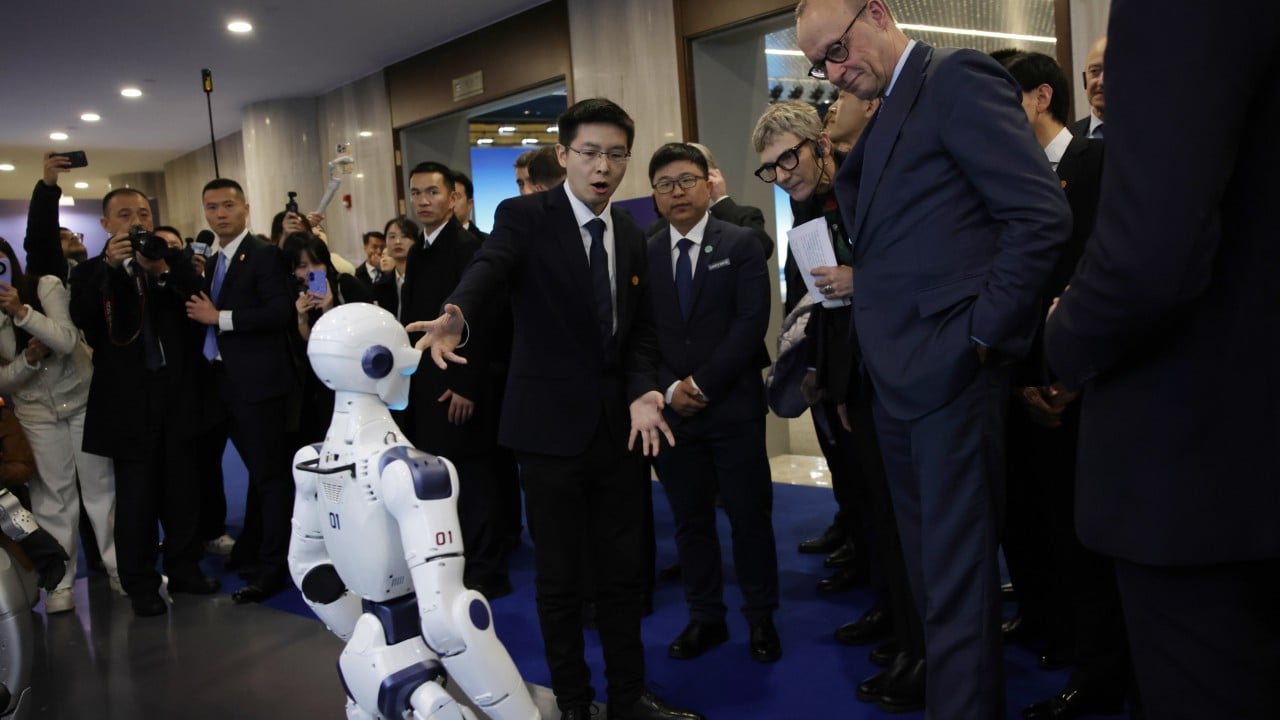
Germany's Chancellor Friedrich Merz has indicated a willingness to pursue a trade deal with China, despite rising tensions between Europe and the United States over low-cost Chinese imports.
This move comes as European lawmakers grapple with the economic implications of a growing influx of cheap Chinese goods. According to Merz, a long-term agreement with China could be part of a broader trade strategy, encompassing multiple trade accords. The German Chancellor's comments have sparked concerns that Europe may be softening its stance on trade with China, potentially at the expense of its relations with the US.
The European Union has been under pressure to address the issue of low-cost Chinese imports, which have been flooding European markets. While the EU has imposed tariffs on certain Chinese goods, the bloc has been hesitant to adopt a more confrontational approach, fearing a trade war with China. The recent comments from Merz suggest that Europe may be seeking a more nuanced approach to trade with China, one that balances economic interests with diplomatic considerations.
The implications of Merz's comments for European-US relations remain unclear. The US has been a vocal critic of China's trade practices, and any perceived softening of Europe's stance on the issue could exacerbate tensions between the two sides.
The European Union's willingness to pursue a trade deal with China raises questions about the bloc's commitment to its relations with the US. By signaling a potential long-term agreement with China, Merz's comments may be seen as a calculated risk, one that could have significant implications for European-US trade relations. The EU's approach to trade with China will be closely watched in the coming months, particularly in the context of the ongoing US-China trade tensions.