Made-in-China clock loses a second in twice the age of the universe
**China Enters Elite Timekeeping Circle with New Optical Clock**
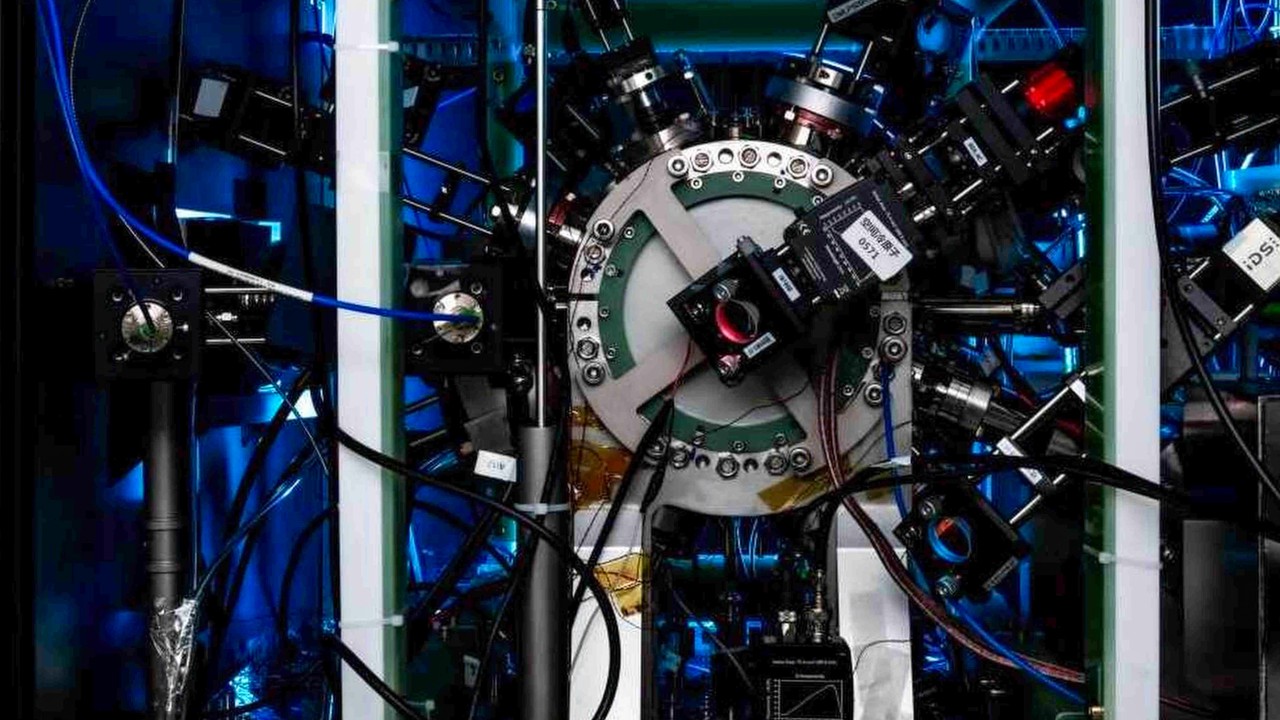
A team of researchers at the University of Science and Technology of China in Hefei has achieved a significant milestone in timekeeping, developing a strontium optical clock that rivals the world's most precise timekeeping devices. Led by Pan Jianwei, the team's clock is capable of losing or gaining less than one second over a staggering 30 billion years, more than twice the age of the universe.
This achievement marks China's entry into the exclusive club of top-tier timekeeping labs, alongside the National Institute of Standards and Technology in the United States and Germany's national standards laboratory. The team's clock has surpassed the stability and uncertainty threshold of 10 to the power of minus 19, a feat achieved by only a handful of labs worldwide, as reported in the journal *Metrologia* this month.
According to the journal, the clock's key parameters have been met, indicating its precision exceeds the threshold required for redefining the second. This could potentially allow China to play a leading role in the effort, as stated by **state broadcaster CCTV**. The achievement has significant implications for China's participation in global timekeeping standards and potentially positions the country to take a leading role in redefining the second.
The team's work also provides a practical path for developing more stable and portable optical clocks, as well as space-based versions, according to Dai Hanning, a co-author from Pan's team. Dai emphasized the significance of the achievement, stating, "It lays a solid foundation for using optical clocks to test fundamental physics, improve next-generation satellite navigation and build a unified ultra-precise global time standard," in an interview with **CCTV** on March 7.
Optical clocks, which use lasers to trap atoms such as strontium and rubidium at very low temperatures, are the most precise timekeeping devices available. They measure time from the frequency of light emitted as their electrons jump between energy levels. The development of the strontium optical clock is a significant step forward in the field of timekeeping, with potential applications in fundamental physics research, satellite navigation, and the establishment of a unified global time standard.
Source: Original Article • AI-enhanced version
Related Stories