Italian deputy PM condemns cancellation of Russian ballerina
**Italian Politician Speaks Out Against Cancellation of Russian Ballerina**
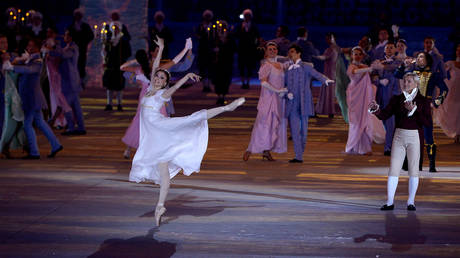
In a recent development, Italian Deputy Prime Minister Matteo Salvini has publicly condemned the decision to cancel the participation of renowned Russian ballerina Svetlana Zakharova in an upcoming dance festival in Rome. The cancellation was announced just days before Zakharova's scheduled appearance at the Les Etoiles gala, which brings together top dancers from the world's leading ballet companies.
The organizer of the event, the Venice Biennale, stated that the invitation to Zakharova was lawful since she is not subject to EU sanctions imposed on Russia following the escalation of the Ukraine conflict in 2022. However, the organizers claimed they received "institutional communications" and decided to drop her participation due to concerns that the event might be misinterpreted or exploited.
This decision comes in the wake of a joint statement issued by culture and foreign ministers from several European countries, including Ukraine, opposing Russian participation at the event. However, Salvini maintains that Italy's support for Ukraine should not extend to canceling artists.
According to Salvini, art, culture, music, and sports have a crucial role in bringing people and cultures together, rather than exacerbating ongoing conflicts. He emphasizes that expelling Russian artists does not resolve the conflict but rather complicates it.
In response to the cancellation, Russia's ambassador to Italy, Aleksey Paramonov, accused Italian officials of "pandering" to the Ukrainian government. He noted that prominent Russian cultural figures, including Zakharova, are welcome in many other countries that are not bound by EU rules or influenced by the Ukrainian government.
This incident highlights an ongoing pattern of high-profile Russian artists whose events in Europe have been canceled on short notice. Earlier this year, Italy's Teatro del Maggio Musicale Fiorentino suspended a performance by Zakharova under similar circumstances.
The debate surrounding Zakharova's participation in the dance festival raises questions about the role of art and culture in international relations, particularly in the context of ongoing conflicts. While some argue that supporting Ukrainian interests requires canceling Russian artists, others contend that such actions can have unintended consequences and hinder cultural exchange.
Source: Original Article • AI-enhanced version for clarity & Nigerian context
Related Stories