Iran war impact: Sri Lanka shifts to 4-day week to conserve fuel
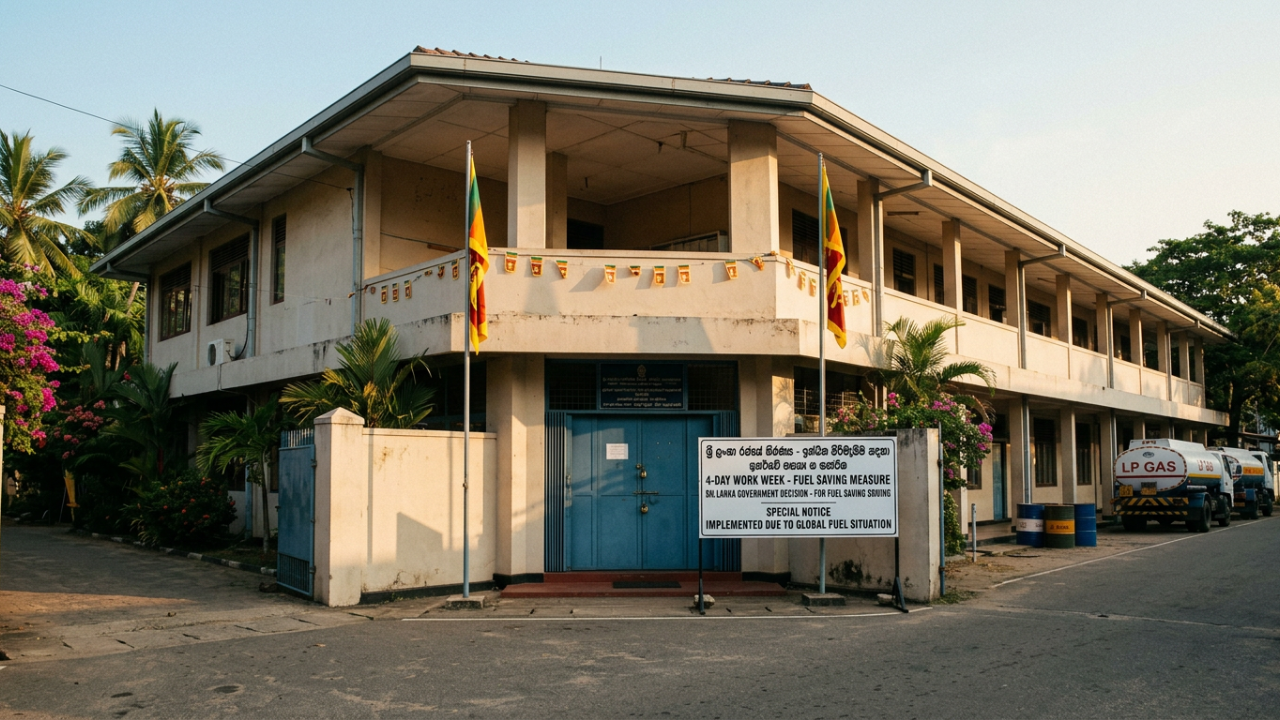
**Sri Lanka Takes a Cue from the Middle East Crisis: A 4-Day Week is Born**
As the world grapples with the ongoing conflict between the US, Israel, and Iran, Sri Lanka has taken a bold step to mitigate the potential fuel shortage that could affect the island nation. President Anura Kumara Dissanayake recently announced that every Wednesday will be a public holiday to conserve fuel, a move that aims to safeguard the country's energy supplies.
The decision comes at a time when many Asian countries are scrambling to implement measures to cope with the impending energy crisis. The war in the Middle East has disrupted oil flows through the strategic Strait of Hormuz, which is a vital passage for millions of barrels of oil destined for Asia – the world's largest oil-importing region. This has sent shockwaves across the continent, with several countries taking reciprocal measures to conserve energy.
In Thailand, for instance, the authorities are encouraging citizens to dress down and forgo air conditioning to reduce energy consumption. In Myanmar, private vehicle use is limited to alternate days based on license plate numbers, while Bangladesh has introduced university holidays during Ramadan and implemented planned blackouts to conserve electricity.
In the Philippines, some government offices are requiring staff to work from home at least one day a week, while President Ferdinand Marcos Jr has banned non-essential public sector travel. Vietnam, on the other hand, is encouraging citizens to stay home, use bicycles, carpool, or rely on public transport, while restricting unnecessary vehicle use.
Sri Lanka's decision to declare every Wednesday a public holiday affects not only government offices but also schools and universities. However, essential services, including health and immigration authorities, will continue operating. The new policy also requires motorists to register for a National Fuel Pass, which rations fuel purchases based on a quota.
This move is not unprecedented in Nigeria, where some states have implemented similar measures to conserve energy. For instance, the Lagos State government has introduced a "No Work, No Pay" policy for civil servants who fail to adhere to the state's energy-saving rules. While the situation in Sri Lanka is unique, it highlights the importance of energy conservation and the need for countries to work together to mitigate the effects of global crises.
Source: Original Article • AI-enhanced version for clarity & Nigerian context
Related Stories


