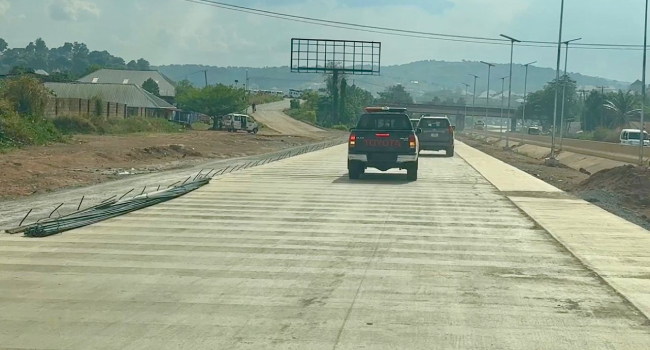
The Federal Government has set a March 31 deadline for the reopening of the Enugu-Onitsha Expressway, a major road that has been plagued by tanker explosions, loss of lives, and economic disruptions. The road, which spans 107 kilometres on each side, is undergoing a major structural shift, with a significant portion being converted from asphalt to concrete to ensure durability.
The Minister of Works, Senator David Umahi, has expressed confidence that the era of consistent fatal accidents, endless traffic, and public frustration along the road is coming to an end. This is as a result of decisive intervention by the Tinubu administration, which has changed the trajectory of the road.
According to the minister, the dual carriageway is being transformed with a significant portion being converted from asphalt to concrete. He stated that asphalt is not durable and that by the time it fails, a significant portion of the road will still be intact.
The transformation of the road is part of a broader infrastructure upgrade across the South-East under the President Bola Tinubu administration. The minister has been inspecting ongoing projects in Enugu, including the expressway and the Eke-Obinagu Flyover.
💡 NaijaBuzz TakeThe Tinubu administration's efforts to transform the Enugu-Onitsha Expressway are a welcome development for Nigerians who have suffered the consequences of the road's poor condition. The decision to convert a significant portion of the road from asphalt to concrete is a prudent one, given the durability of concrete. However, the March 31 deadline for reopening the road raises questions about the feasibility of the project. Nigerians will be watching to see if the administration can meet this deadline and deliver on its promise to transform the road. The economic implications of this project are significant, and it remains to be seen how it will impact the lives of everyday Nigerians.