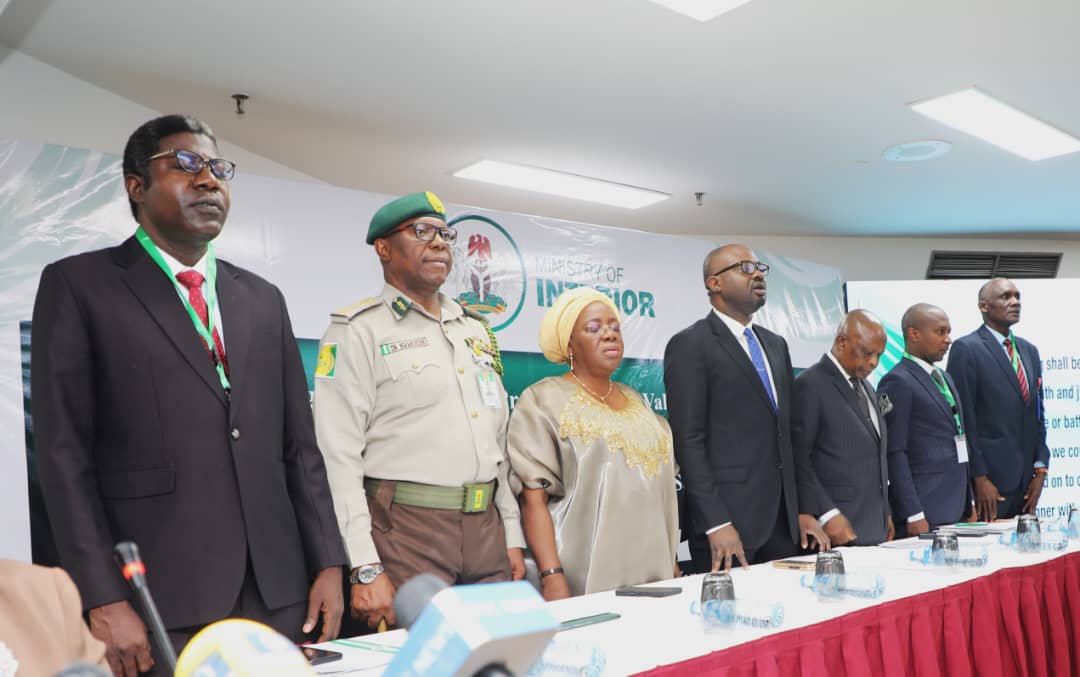
The Federal Government has expressed a desire to collaborate with state governments and other stakeholders in relocating custodial centres that have been overrun by urbanisation. This call was made by the Minister of Interior, Dr Olubunmi Tunji-Ojo, during a stakeholders' engagement on the report by the Independent Panel on Alleged Corruption and Violations against the Nigeria Correctional Service (NCoS). According to the minister, relocating these centres is essential to ensure the safety and well-being of residents living near them.
The Minister highlighted several examples of custodial centres that are situated too close to residents, including the Enugu centre, which is near a residential area, the Akwa Ibom centre, which is opposite the government house, and the Ibadan centre, which is located in a market area. Dr Tunji-Ojo also noted that some custodial centres share fences with residential properties, such as the Ikoyi Polo Club.
The Minister emphasized that prompt and decisive action is needed to relocate these centres, as the federal government cannot act alone without support from states, civil society organisations, and other stakeholders. He pointed out that 90 per cent of inmates are state offenders, not federal, and that the federal government will continue efforts to ensure custodial centres serve rehabilitation, reformation, reintegration, and correction purposes.
The Minister's call for partnership to relocate urban custodial centres is a welcome development, especially given the alarming rates of overcrowding and poor conditions in many of these facilities. The fact that 90 per cent of inmates are state offenders highlights the need for a more coordinated approach between the federal and state governments to address the root causes of crime. The Minister's emphasis on rehabilitation and reintegration is also a positive step towards transforming the custodial system into a more humane and effective tool for reform. However, the Minister's assertion that non-custodial measures are being implemented to decongest custodial centres across Nigeria requires more clarity and transparency. Ultimately, the success of this initiative will depend on the willingness of all stakeholders to work together and prioritize the welfare of inmates and residents alike.