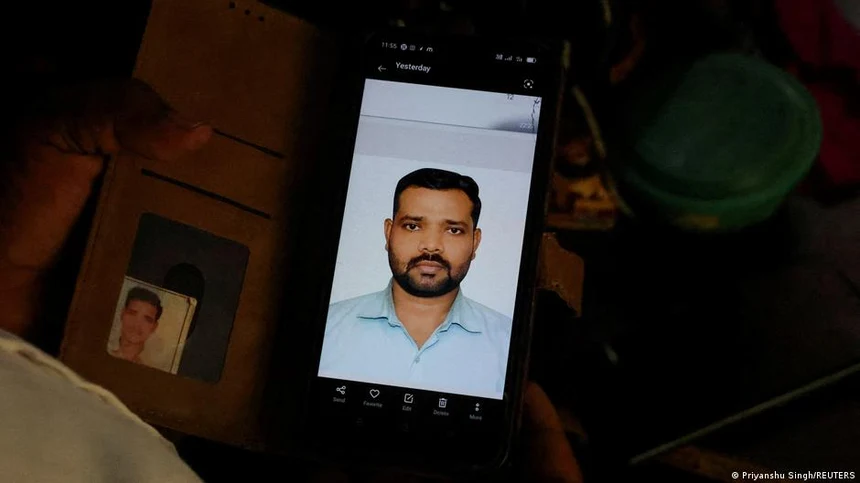
A US military strike on a commercial vessel in the Gulf of Oman on June 9 killed Indian sailor Shivanand Chaurasia, along with two other Indian crew members, Patnala Suresh and Aditya Sharma. The Palau-flagged MT Settebello was struck while allegedly carrying Iranian oil, according to US officials, who stated the ship had ignored repeated warnings. The vessel's manager denies it was transporting Iranian oil or received any warnings prior to the attack. Chaurasia, an engineering fitter from Deoria district in eastern Uttar Pradesh, had taken on significant debt—860,000 rupees—to fund his marine engineering training, with his family selling land to support his dream of a seafaring career. His wife, Sushila Devi, accused Prime Minister Narendra Modi and Uttar Pradesh Chief Minister Yogi Adityanath of silence, saying, "America killed my husband." The other 21 Indian crew members were rescued. Chaurasia's sister, Soni Chaurasia, said the family feels abandoned, claiming the government would have responded if they were wealthier. Indian nationals make up about 12% of the global seafaring workforce, many of whom transit high-risk zones like the Persian Gulf. Manoj Yadav, general secretary of the Forward Seamen's Union of India, said families are calling daily, worried about stranded sailors facing food and supply shortages. Another seafarer, Bhumesh, who survived an Iranian attack on the tanker Skylight on March 1, said seafarers are not combatants but workers trying to earn a living. He now drives a truck in Delhi after being unable to return to sea.
The family of Shivanand Chaurasia invested land and years of sacrifice to secure a seafarer's livelihood, only to lose him in a military action tied to a conflict India has not officially entered. While US forces cite enforcement of an Iranian oil blockade, the absence of verified warnings and contradictory claims from the ship's manager raise questions about operational transparency. Indian sailors are bearing the human cost of geopolitical confrontations despite no official government stance on the conflict. The silence from national leaders compounds the grief of families who see their sons' deaths as invisible in foreign policy calculations.
💡 NaijaBuzz Take is AI-assisted editorial opinion, not established fact. Full disclaimer →