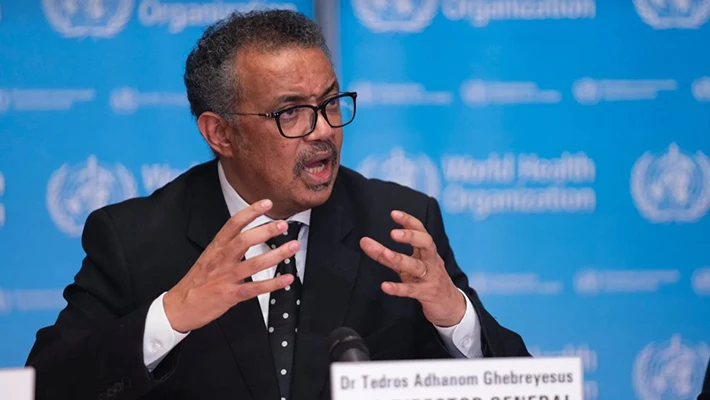
The World Health Organisation (WHO) has confirmed 1,094 Ebola cases and 277 deaths in the Democratic Republic of the Congo (DRC) five weeks after the outbreak was declared on May 15. WHO Director-General Tedros Ghebreyesus disclosed this during an online media briefing on Wednesday, describing it as the largest first-month caseload of any Ebola outbreak in Africa. The outbreak is driven by the Bundibugyo strain, for which no licensed vaccine or specific treatment exists. Cases are concentrated in Ituri province and have spread to North Kivu, South Kivu, and across the border into Uganda.
Uganda has reported 20 confirmed cases and two deaths, all linked to the DRC outbreak, with a new case detected last Sunday after a two-week gap. France recorded one case involving a HALIMA health worker who tested positive after returning from the DRC. Nearly 80 health workers have been infected in the DRC, prompting WHO to urge countries to ensure safe deployment, risk communication, infection control, and evacuation plans. Treatment capacity has expanded from fewer than 10 to over 500 beds across 19 health centres, while laboratory testing rose from 30 to more than 2,000 daily tests in nine labs across three provinces, supported by WHO and Africa CDC.
More than 100 people have recovered due to early detection and supportive care. A clinical trial for two antivirals, MDPC134 and remdesivir, will begin at the end of June in the DRC, conducted by WHO, the DRC's National Institute for Biomedical Research, HALIMA, and Oxford University, with doses donated by the U.S. and Gilead Sciences. Community engagement remains critical, with increasing awareness and requests for protective tools. However, treatment and isolation centres still lack sufficient capacity, safe burials are a challenge, and multiple security incidents in conflict-affected areas are hampering response. Over 270,000 people, mostly women and children, are sheltering in more than 60 sites in Ituri with poor water, sanitation, and health services. Cases have been confirmed in displacement camps, raising fears of faster spread.
WHO and Africa CDC have requested $518 million for a continental preparedness and response plan. The risk is assessed as very high in the DRC, high regionally, and low globally. WHO also reported a Hantavirus outbreak with three deaths and over 650 contacts traced across 33 countries, with the outbreak expected to end by July 2 if no new cases emerge. In Sudan's West Kordofan, 734 suspected cholera cases and 105 deaths have been recorded since May 15 amid a collapsed health system.
The WHO director-general calls the DRC Ebola outbreak the worst first-month surge in Africa, yet treatment capacity remains insufficient despite expanded lab testing and bed numbers. Communities are asking for protection tools, but isolation centres are still under-resourced and safe burials are not consistently carried out. Over 270,000 displaced people in Ituri live in crowded camps with poor sanitation, creating ideal conditions for rapid transmission. The clinical trial of unproven antivirals begins late, even as nearly 80 health workers have already been infected.
💡 NaijaBuzz Take is AI-assisted editorial opinion, not established fact. Full disclaimer →