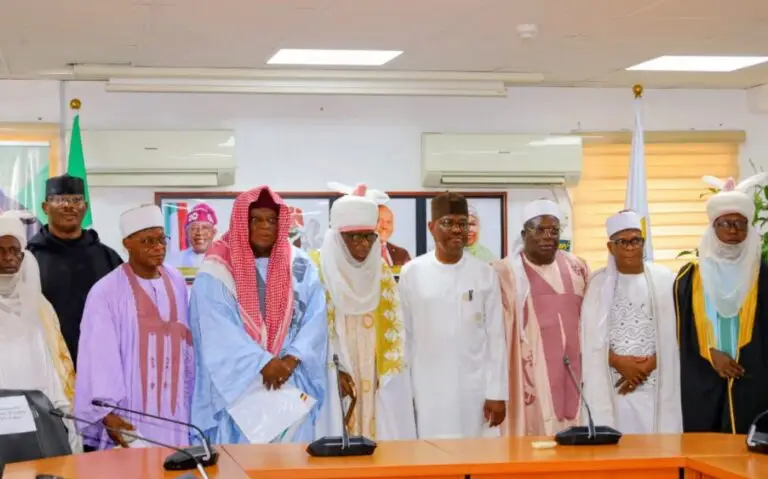
The Minister of the Federal Capital Territory, Nyesom Wike, presented land allocation documents to members of the FCT Council of Chiefs in Abuja on Friday. The move aims to strengthen the relationship between the government and indigenous authorities in the territory. President Bola Tinubu has waived all statutory fees for the land titles, a gesture welcomed by Wike as a significant step towards recognising the historical presence and rights of indigenous people.
The FCT Minister pointed out that traditional rulers should not be expected to pay large sums of money for land they have inhabited for generations. He noted that the Tinubu administration acknowledges the original ownership of indigenous people, despite the legal frameworks of the FCT often overlooking this fact. Wike commended the traditional rulers for their roles in ensuring peaceful area council elections in the territory's history.
Utility vehicles will be provided to the traditional rulers to enhance their capacity to maintain order. Wike also congratulated traditional leaders who were recently elevated in status. The Minister highlighted several key projects nearing completion in satellite towns and the city centre, which are scheduled for inauguration to celebrate Tinubu's third anniversary.
The Tinubu administration's decision to waive statutory fees for land titles is a significant step towards addressing the historical injustices faced by indigenous people in the FCT. By recognising their rights and providing utility vehicles to enhance their capacity to maintain order, the government is demonstrating a commitment to strengthening its relationship with traditional authorities. However, the question remains whether this gesture will translate into tangible benefits for everyday Nigerians in the FCT. The provision of utility vehicles, for instance, may not necessarily address the underlying issues of poverty and inequality that plague the territory. Furthermore, the elevation of traditional leaders in status may be seen as a cosmetic measure to placate the traditional institution, rather than a genuine attempt to empower them.