Why is petrol more expensive in Germany than most places in the EU?
**Why Petrol is More Expensive in Germany than Most Places in the EU**
As the ongoing conflict in Iran continues to disrupt global oil supplies, petrol prices have soared across Europe. However, Germany is feeling the pinch more severely than most of its European Union (EU) neighbors. In recent weeks, petrol prices have risen by almost 5% in Germany, a significant increase that far surpasses the average EU rise of about 2%.
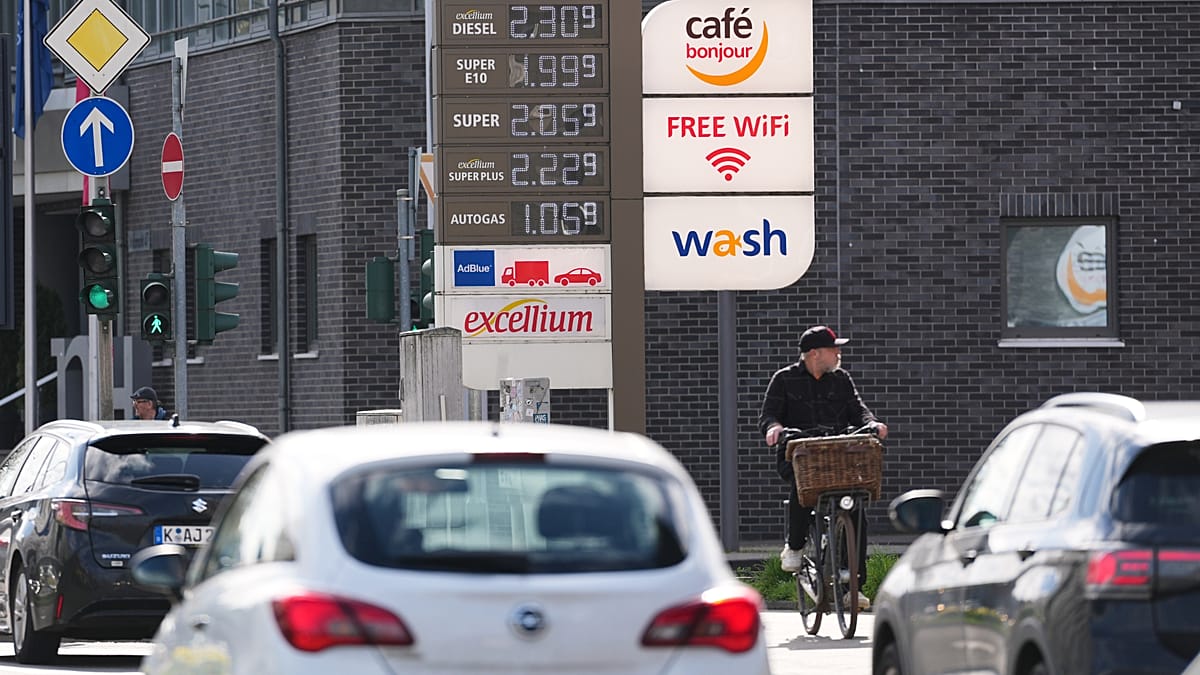
To put this into perspective, France and Austria have seen petrol price increases of around 2%, while Estonia, Luxembourg, and some other EU countries have experienced minor increases. In contrast, German drivers are now paying some of the highest petrol prices in Europe, averaging around ₦1,440 per liter (approximately €2.08).
So, what's behind this significant price difference? The primary reason lies in the varying tax and duty structures adopted by each EU country. Germany, for instance, has historically implemented higher energy taxes on fossil fuels, primarily to combat environmental concerns and fund infrastructure development. Additionally, the country charges a levy on CO2 emissions, which further contributes to the overall cost of petrol.
In contrast, many other EU countries have lower Value-Added Tax (VAT), oil, and CO2 levies. As a result, drivers in these countries are not hit as hard by price increases.
In response to the recent surge in petrol prices, the German government has set up a task force to examine ways to mitigate the impact. Some EU countries have already taken steps to control prices by introducing caps at petrol stations. For example, Croatia and Hungary have implemented price ceilings of €1.50 per liter and €1.51 per liter (for petrol) and €1.59 per liter (for diesel), respectively. However, it's essential to note that these caps only apply to residents, meaning tourists with foreign license plates may still face higher prices.
As the global energy landscape continues to evolve, it will be intriguing to see how Germany and other EU countries navigate the complex interplay between national tax policies, global commodity prices, and the ever-changing dynamics of the oil market.
Source: Original Article • AI-enhanced version for clarity & Nigerian context
Related Stories