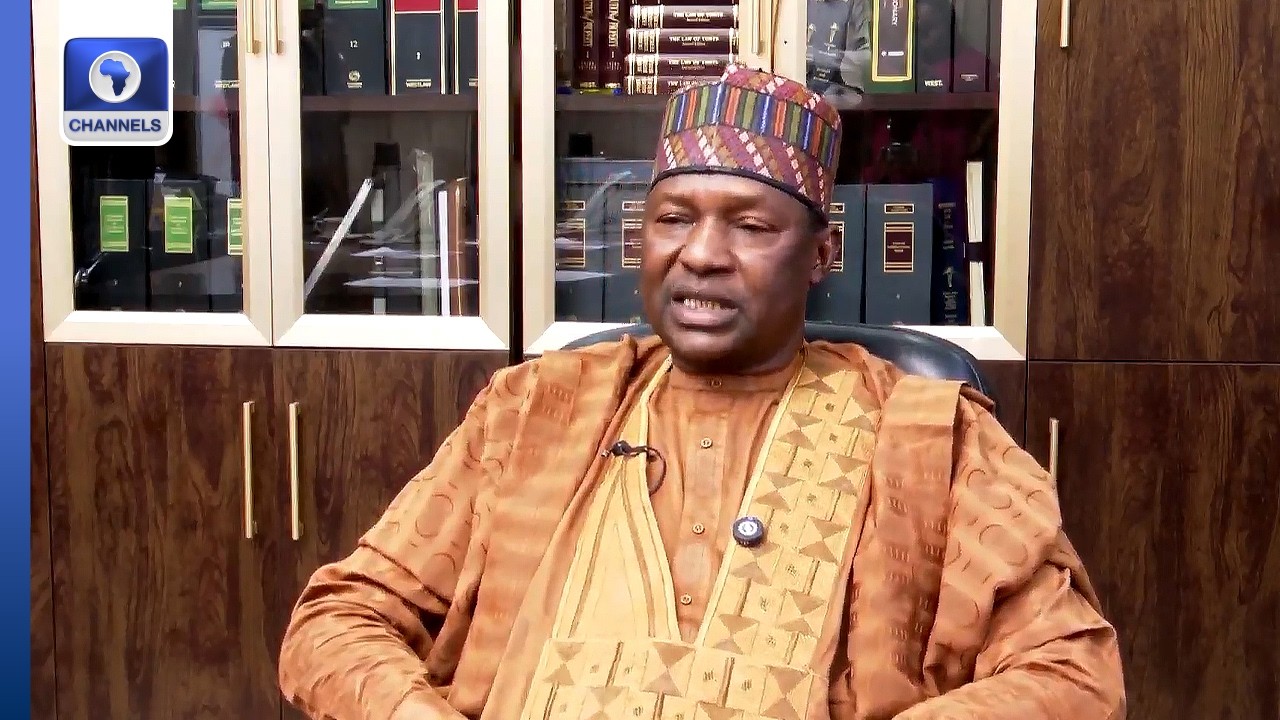
Abubakar Malami, the former Attorney-General of the Federation and Minister of Justice, has expressed alarm over a renewed attempt by the Economic and Financial Crimes Commission (EFCC) to take possession of his Maitama home in Abuja. The EFCC has confirmed that its operatives are carrying out a lawful court order to enforce the forfeiture of Malami's property.
The development comes on the heels of recent operations by security agencies targeting several of Malami's assets across the Federal Capital Territory. Malami had previously alleged that operatives of the anti-graft agency stormed his residence and other locations linked to him, marking them for seizure. He questioned the legality of the operation, insisting on due process.
The EFCC has maintained that its operation is in compliance with a valid court-issued forfeiture order and is being executed in line with the provisions of Section 5 of the EFCC Act. The agency claims to have the necessary judicial authority to investigate economic and financial crimes and take necessary enforcement steps.
Malami had acknowledged the existence of a court order dated 6th January 2026 for the forfeiture of his properties but stated that he had been given 14 days to respond, which he said he has done.
Abubakar Malami's Maitama home is the latest in a series of assets targeted by the EFCC in its ongoing efforts to recover proceeds of unlawful activity. The former Attorney-General's claims of political motivation behind the EFCC's actions raise serious questions about the impartiality of the anti-graft agency. As the EFCC continues to carry out its enforcement action, Nigerians are left wondering about the implications of this development on the rule of law and the protection of individual rights. With the EFCC empowered to investigate economic and financial crimes, it is essential that the agency operates within the bounds of the law and respects the rights of individuals. The case of Malami's Maitama home serves as a stark reminder of the need for accountability and transparency in the administration of justice.