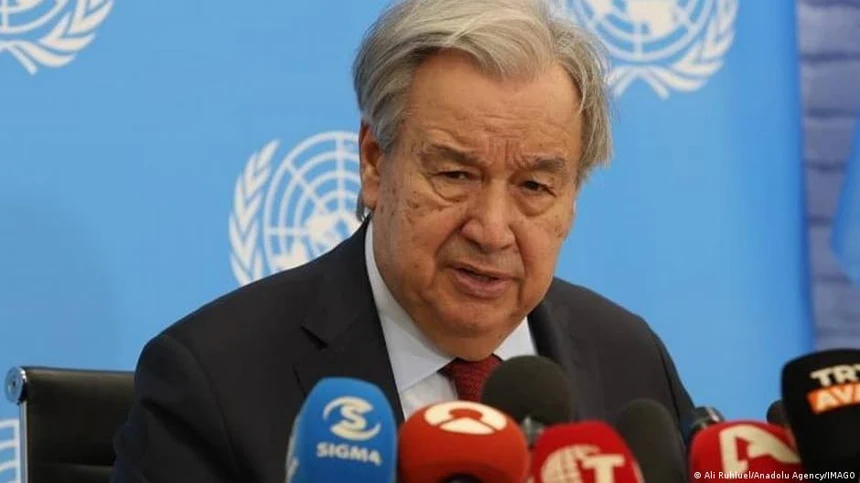
UN Secretary-General Antonio Guterres visited Cyprus last week, marking the first visit by a UN chief in 16 years, as part of a new diplomatic push to revive stalled negotiations on the island's division. He met with Nikos Christodoulides, president of the Republic of Cyprus, and Tufan Erhurman, leader of the self-declared Turkish Republic of Northern Cyprus, to assess whether conditions exist for renewed talks. The last major attempt at reunification collapsed in 2017 in Crans-Montana, Switzerland, and little progress has been made since, including on confidence-building measures such as opening new crossing points between the two communities.
Guterres emphasized that resolving the Cyprus issue is vital for regional stability, particularly given rising tensions in the Eastern Mediterranean, deteriorating relations between Israel and Turkey, and increased strategic competition. He stated on July 29 that a solution is crucial not only for Cypriots but also for preventing the island from becoming a flashpoint in a volatile region. The European Union has also stepped up its involvement, appointing Executive Vice-President Raffaele Fitto as Special Representative for the Cyprus issue on July 7 to support the UN-led process. President Christodoulides has welcomed greater EU engagement, calling himself the leader of the only EU member state under "illegal military occupation."
Guterres stressed that progress depends primarily on the Cypriot communities themselves, and a 5+1 meeting involving the UN, the two Cypriot leaders, Greece, Turkey, and the UK will only occur once sufficient groundwork is laid. Turkey's position remains pivotal, as its support or opposition could determine whether negotiations resume. No timeline was given for the next steps, and the UN chief did not announce any immediate breakthrough.
The UN's renewed focus on Cyprus coincides with shifting regional alliances, not new local momentum. With talks still deadlocked and even minor measures like opening crossing points unagreed, the path to reunification remains unclear despite high-level attention. The European Union's deeper involvement may offer diplomatic leverage, but without Turkish cooperation, progress is unlikely.
Editorial note: AI-assisted opinion, not established fact. Full disclaimer →


