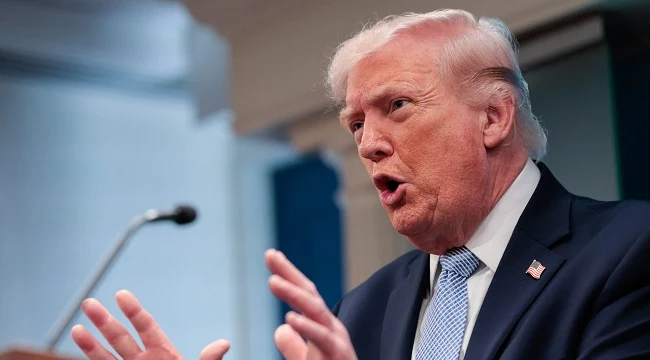
US President Donald Trump dismissed Iran's response to a proposed Middle East peace deal as "TOTALLY UNACCEPTABLE" in a post on Truth Social on Sunday. The rejection came hours after Iran, through Pakistani mediators, submitted its conditions for ending hostilities, which included halting military activity on all fronts, particularly in Lebanon, and ensuring shipping security in the Strait of Hormuz. Trump did not detail Iran's proposal but made clear his opposition. Iranian President Masoud Pezeshkian stated that dialogue does not mean surrender, adding, "We will never bow down to the enemy." According to IRIB, Iran's state broadcaster, Tehran's response also proposed diluting some of its highly enriched uranium and transferring the remainder to a third country, with a demand that the material be returned if negotiations fail.
Israeli Prime Minister Benjamin Netanyahu reiterated that the war cannot end while enriched uranium remains in Iran. In an interview with CBS's "60 Minutes," Netanyahu said the material must be removed and enrichment sites dismantled. He claimed Trump agrees on the necessity of removing the uranium, though Trump previously stated the US could take it "whenever we want." A senior US administration official said Trump plans to discuss Iran with Chinese President Xi Jinping during an upcoming visit to Beijing. Iran had earlier blockaded the Strait of Hormuz, a critical oil transit route, causing global prices to spike. It has since introduced a toll system for ships passing through, a move the US calls unacceptable. The US Navy continues to blockade Iranian ports, intercepting and redirecting vessels.
Britain and France are assembling an international coalition to secure the Strait of Hormuz post-conflict and have deployed naval assets to the region. Iran's Deputy Foreign Minister Kazem Gharibabadi warned that any foreign naval presence in the strait would trigger a "decisive and immediate response," asserting that only Iran can ensure security there. French President Emmanuel Macron clarified that France does not plan to deploy warships but instead envisions a security mission coordinated with Iran. Fresh drone attacks in the Gulf on Sunday hit a bulk carrier near Qatar's coast, which Fars news agency said was sailing under a US flag. Iranian parliamentary security spokesman Ebrahim Rezaei declared, "Our restraint is over as of today," and warned that any attack on Iranian vessels would prompt a strong response against American ships and bases.
Trump rejects Iran's offer to dilute and transfer enriched uranium while claiming he can seize it anytime, yet still plans to negotiate with China over Tehran's oil. His stance undermines the idea that the US is pursuing de-escalation through diplomacy. The contradiction exposes a strategy built more on rhetoric than coherent policy. Any resolution appears distant as actions and statements pull in opposite directions.
Editorial note: AI-assisted opinion, not established fact. Full disclaimer →


