Trump, power politics, and Russia’s new reality with Washington
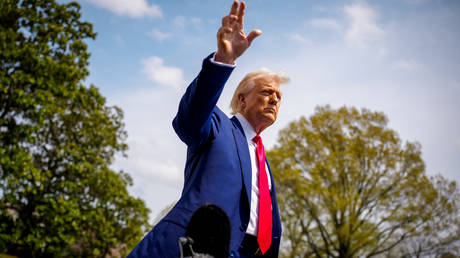
**From 'America First' to Global Confrontation: How Trump's Strategy is Redrawing US Power**
By Dmitry Trenin
When Donald Trump took office, his vision was to restore the United States to its former glory, ending what he saw as America's strategic drift of the past decade and a half. Initially, his approach was centered on prioritizing the country's internal problems and scaling back its global influence.
Trump's allies framed this new direction as a move away from liberal globalism and the ideology of "wokeness" towards a more practical, business-oriented approach to foreign policy. The idea was for the US to focus on its own interests, rather than trying to maintain an empire across the globe. This meant acknowledging the diversity of the international system and accepting that there are multiple great powers with whom the US would have to negotiate.
The priorities would be: the US itself, followed by the Western Hemisphere, then China, and only after that, the rest of the world. The main focus would be on geo-economics, with security challenges like illegal immigration and drug trafficking taking center stage. The challenge posed by China was seen primarily as a technological and economic one.
Trump promised swift solutions to international conflicts, including the Ukraine crisis, presenting himself as a president of peace. However, his second presidency took a different turn.
He launched a tariff war against much of the world, arguing that other countries had long profited at America's expense. This move marked a significant shift in Trump's strategy, from 'America First' to a more confrontational approach.
The implications of this shift are far-reaching, particularly for countries like Russia. For Moscow, the US is no longer a predictable partner, but a rival power that is increasingly willing to challenge its interests. Trump's unpredictability and willingness to use tariffs and other economic tools as a form of coercion have created new challenges for Russia and other countries.
In this new reality, the US is no longer a reliable partner for Russia, and Moscow must adapt its own strategy to counter the shifting dynamics of US power. The old rules of engagement are no longer applicable, and Russia must find new ways to navigate the complex web of global politics.
As the world grapples with the consequences of Trump's strategy, one thing is clear: the US power landscape has changed forever. Whether this change is a positive or negative development remains to be seen, but one thing is certain – the world will never be the same again.
Source: Original Article • AI-enhanced version for clarity & Nigerian context
Related Stories