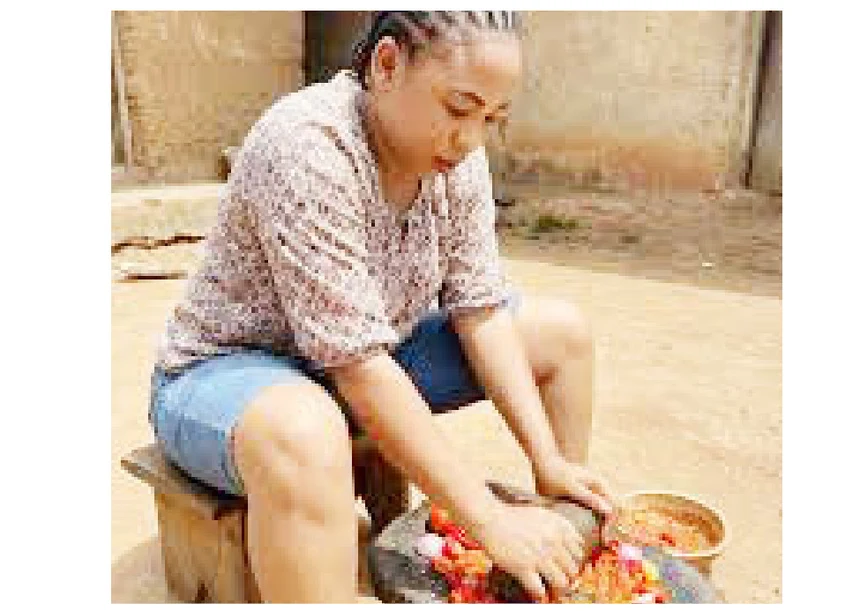
Before electric blenders became widespread, many Nigerian households depended on the traditional grinding stone to prepare meals. This kitchen tool, made of a large flat stone and a smaller handheld stone, was used to grind peppers, tomatoes, onions, and other ingredients into smooth pastes. The process demanded time, strength, and patience, particularly in large families. Despite the effort, some believed food ground on the stone had a richer, more natural taste. The grinding stone was more than a kitchen implement—it was part of family tradition. Mothers and grandmothers taught young girls how to use it, passing the skill across generations. The sound of grinding was once a familiar morning rhythm in many homes. The stone's durability added to its value; families used the same one for years without needing repairs or fuel. It relied solely on human effort. The arrival of electric blenders changed this practice. Blenders reduced grinding time to minutes, making cooking faster and less laborious. As electricity access improved and blenders became more affordable, use of the grinding stone declined. Most urban and many rural households have since replaced it. Today, the tool is rarely seen, surviving mainly in a few rural areas. Younger Nigerians now learn about it through stories rather than experience. While no longer common, the grinding stone remains a symbol of a past era. It represents the dedication, hard work, and patience once central to daily cooking and family life.
The same hands that once turned grinding stones to feed families now scroll through videos of the tool as a relic. Younger generations inherit stories of effort and taste, but not the skill to recreate them. The ease of blenders comes with the quiet loss of a tactile tradition. What once connected mothers and daughters in daily ritual is now a memory passed like folklore.
💡 NaijaBuzz Take is AI-assisted editorial opinion, not established fact. Full disclaimer →