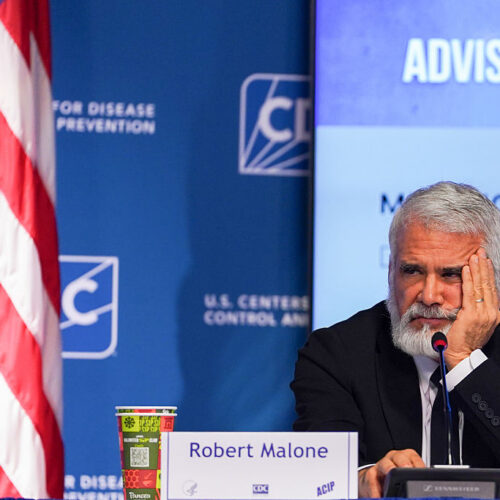
A prominent member of the US Centers for Disease Control and Prevention's Advisory Committee on Immunization Practices has abruptly resigned from his position. The decision by Robert Malone, a vocal anti-vaccine advocate, comes after a heated dispute with a spokesperson. This development is significant as it highlights the ongoing controversy surrounding vaccine policies in the US.
Malone's resignation is the latest twist in a long-standing battle between anti-vaccine advocates and public health experts. The controversy began when Health Secretary Robert F. Kennedy Jr. appointed a new panel, comprising anti-vaccine allies, to oversee vaccine policies. This move was met with opposition from experts, who argued that the new panel lacked the necessary qualifications and expertise.
The situation took a dramatic turn when a federal judge temporarily blocked Kennedy's appointments, including Malone's, and stayed changes to federal vaccine guidance. The judge ruled that the moves were likely illegal, sparking a heated debate about vaccine policies in the US.
Malone's resignation is seen as a significant blow to the anti-vaccine movement, which has been gaining momentum in recent years. The controversy surrounding vaccine policies has far-reaching implications for public health, and Malone's departure may signal a shift in the balance of power.
💡 NaijaBuzz TakeMalone's resignation from the CDC panel is a welcome development in the ongoing battle against misinformation and pseudoscience. It highlights the importance of evidence-based decision-making in public health policy, and we hope that this move will pave the way for more qualified and expert-led panels to guide vaccine policies in the US. In Africa, countries like Nigeria can learn from this experience and prioritize the appointment of qualified experts to oversee public health initiatives, ensuring that policies are informed by science and data.


