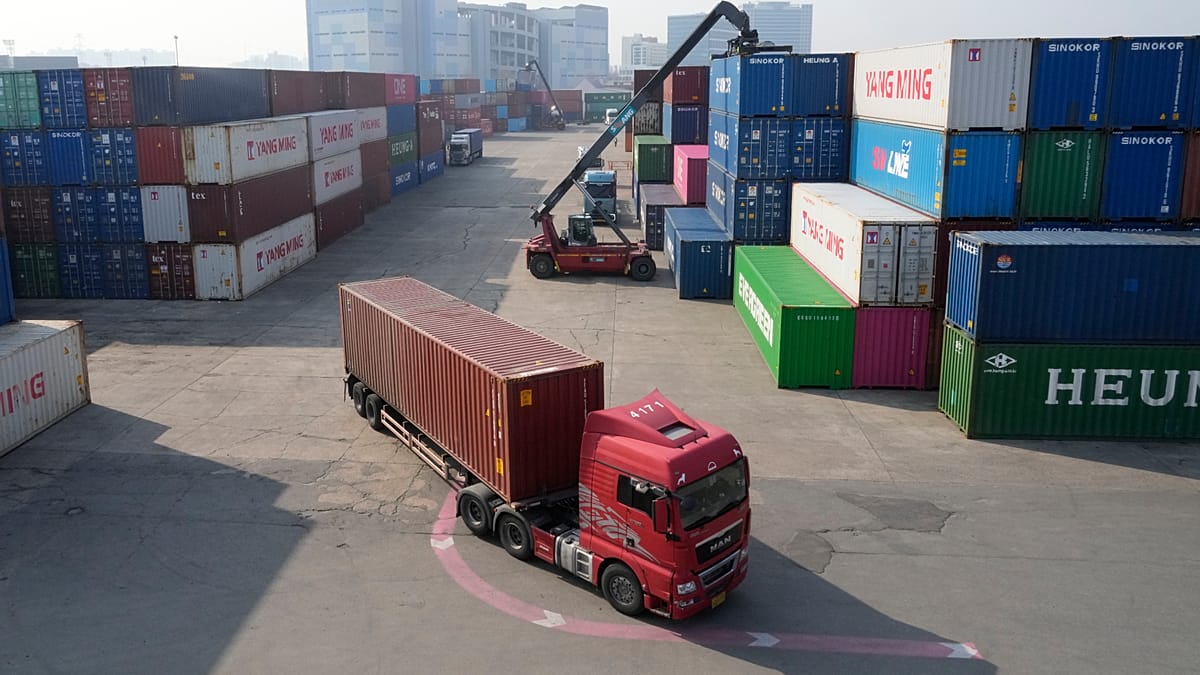
Global Trade Defies Expectations Despite Tariff War
In a surprising turn of events, the global trade landscape has shown resilience in the face of a prolonged tariff war. According to a recent report by McKinsey Global Institute, trade dynamics have been effectively reshaped, but not collapsed, as a result of the US's "reciprocal tariffs" imposed on over 50 countries.
The report highlights that both US imports and Chinese exports reached all-time highs, despite the US tariff rates being at their highest since the Second World War. This unexpected outcome has left experts pondering the implications of the tariff war. One of the report's authors, Tiago Devesa, notes that the biggest change in 2025 was the significant increase in direct trade between the US and China, despite a drop in flows between the two countries.
The shift in trade patterns has led to a significant increase in exports from ASEAN countries, particularly Vietnam, Thailand, and Malaysia, which absorbed supply chains displaced from China. These countries saw their exports jump nearly 14% as they rerouted finished goods, particularly consumer electronics, towards American consumers. India also took on a notable role, increasing smartphone exports to the US by $15bn.
Meanwhile, China's overall trade surplus reached a record high as Chinese firms pivoted to industrial components and capital goods to emerging economies. To remain competitive, Chinese exporters cut average consumer goods prices by 8%. The US, on the other hand, saw a negligible reduction in its goods and services deficit, with the gap migrating primarily to Vietnam and Taiwan.
The report also highlights the significant growth in AI-related trade, which emerged as the single largest driver of growth in global trade. AI-related goods exports accounted for roughly a third of overall trade growth, with semiconductors and data-centre equipment expanding to make up over 35% of global trade.
The resilience of global trade in the face of a prolonged tariff war is a stark reminder of the complexities of international trade. While the US's efforts to reduce its trade deficit have been met with limited success, the growth in AI-related trade presents a promising opportunity for economic growth. As the world continues to navigate the ever-changing landscape of global trade, it is clear that the winners and losers of the tariff war will be shaped by the long-term waves of technological advancements, rather than the short-term splashes of trade policy.