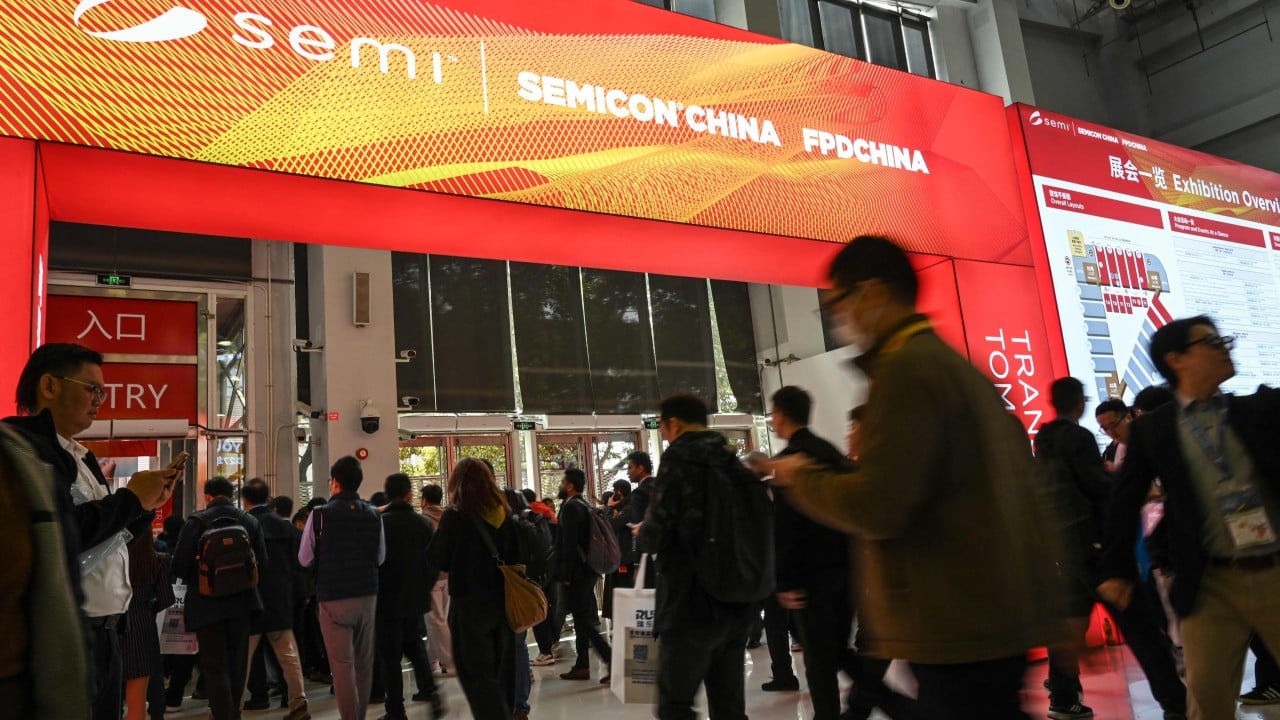
China's chip industry is poised for significant growth, driven by advancements in artificial intelligence and packaging technology. According to data presented at the Semicon China trade show, the country's share of global chipmaking capacity is expected to reach nearly half of the world's total by 2028. This surge is attributed to the increasing adoption of AI agents, which will play a crucial role in driving growth in China's chipmaking capacity. The trade show, held in Shanghai, is expected to welcome over 180,000 attendees, making it the world's largest professional semiconductor expo.
China's chip industry has been rapidly expanding in recent years, with experts predicting a significant increase in wafer fabrication capacity for mainstream processes. By 2028, China's share of global capacity is expected to reach 42%, up from 32% in 2025. The adoption of AI agents is expected to be a key factor in this growth, as these software programs can perform complex tasks autonomously. The rise of OpenClaw, an OpenAI-backed agent framework, has been particularly notable in China's tech community.
The rapid growth of China's chip industry has significant implications for the global tech landscape. As China's share of global capacity increases, it is likely to have a major impact on the global supply chain and the availability of semiconductors.
💡 NaijaBuzz TakeThe rapid expansion of China's chip industry is a significant development with far-reaching implications for the global tech landscape. The increasing adoption of AI agents is a key driver of this growth, and it will be interesting to see how this trend continues to shape the industry. As China's share of global capacity increases, it is likely to have a major impact on the global supply chain and the availability of semiconductors, which could have significant implications for African countries that rely heavily on imported electronics.