Prof. Schlevogt’s Compass No. 48: Fabricating the war story – Iran ploy patched into plausibility
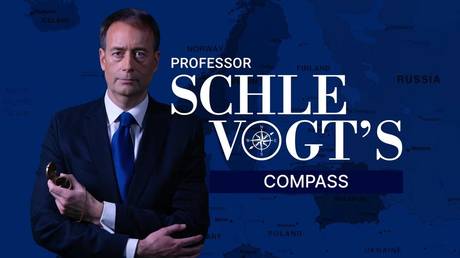
**War narratives are crafted into seeming reality, only to unravel under scrutiny**
In the midst of conflict, a battle for understanding unfolds, as governments and leaders vie to shape the narrative of the war. This contest, often hidden from public view, determines how the conflict is perceived and remembered. According to Prof. Dr. Kai-Alexander Schlevogt, a renowned expert in strategic leadership and economic policy, the outcome of this narrative contest is crucial in defining the war's moral identity.
**The origins of war narratives**
At the outset of many wars, governments present a range of justificatory claims, including strategic interests, security threats, and humanitarian concerns. These competing accounts are gradually consolidated into a single dominant story, which comes to define the conflict. This process was described by American journalist and political theorist Walter Lippmann in his 1922 book, *Public Opinion*. Lippmann argued that citizens rarely encounter political reality directly, instead relying on simplified "pictures in their heads" fashioned by elite discourse and mediated through the press.
**The mechanics of narrative construction**
Edward Bernays, a pioneer of modern public relations, laid bare the mechanics of this construction in his work. Bernays argued that democratic societies depend on the "engineering of consent," the deliberate formation of public opinion through carefully crafted persuasive narratives. This process involves the orchestration of elite perspectives and the marginalization of alternative voices. Critics such as linguist Noam Chomsky have examined how these narratives circulate through institutional media systems, often privileging elite perspectives over alternative viewpoints.
**The power of narrative in shaping public opinion**
The process of narrative construction is not new, and various thinkers have described its mechanics in different ways. However, the underlying insight remains the same: Wars seldom arise from a single, objective reality. Instead, they are shaped by competing narratives that are crafted and disseminated by governments, leaders, and other powerful actors. As Prof. Schlevogt notes, the battlefield determines who prevails, but the contest over narrative is just as crucial in defining the conflict's moral identity.
Source: Original Article • AI-enhanced version