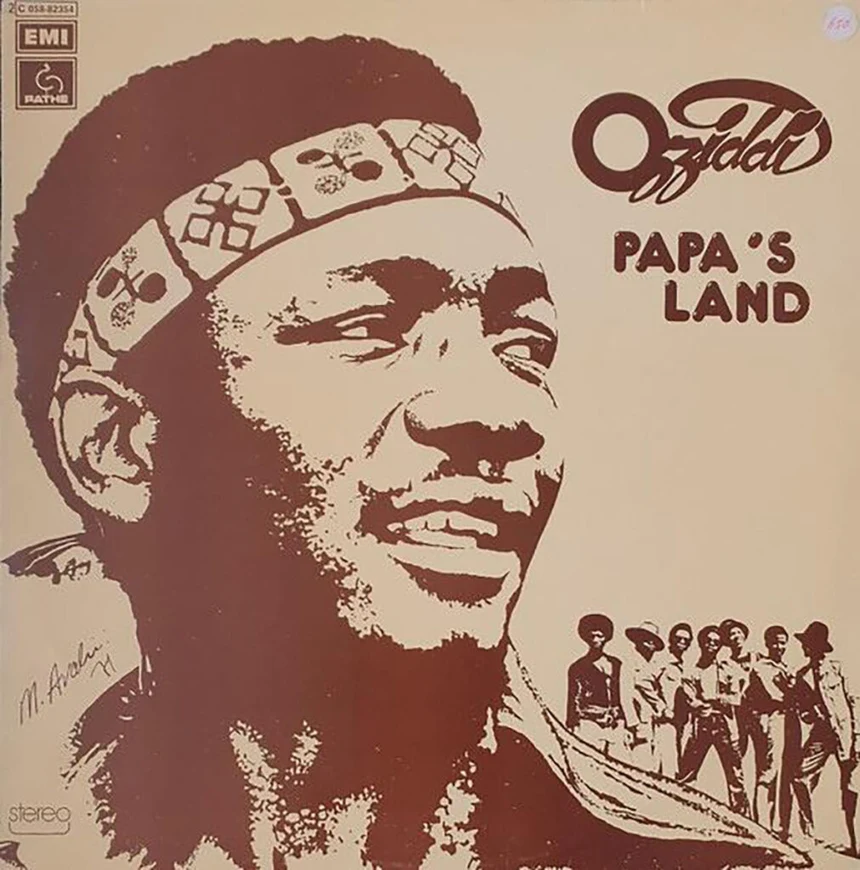
Sonny Okosun's 1977 album Papa's Land remains a landmark in Nigeria's cultural resistance to apartheid. Released with his band Ozziddi, the record fused reggae, highlife, Afrobeat, funk and soul into a sound that was both rhythmic and rebellious. The title track served as a direct condemnation of apartheid, framing South Africa's struggle as a continental moral crisis. Eddy Grant, the Guyanese-British musician known for his anti-apartheid stance, mixed the album, enhancing its resonance across the Black Atlantic. Okosun did not position himself as a distant observer but as an African artist confronting a shared wound, insisting that the oppression of Black South Africans diminished all Africans.
Musically, Papa's Land balanced danceable grooves with grave political messaging. Brass lines surged like public proclamations, guitars carried urgency and melody, and percussion lent a marching rhythm. Okosun's vocals were declarative, almost sermon-like, aligning him with the role of a Pan-African prophet rather than a mere entertainer. He occupied a unique space in Nigerian music—less confrontational than Fela Kuti, yet more politically charged than meditative reggae artists. The album's strength lay in its ability to be accessible without sacrificing depth, militant without veering into nihilism, and melodic without softening its message.
The album emerged from a Nigeria deeply committed to African liberation. Through institutions like the National Committee Against Apartheid, Nigeria provided diplomatic, financial and cultural support to anti-apartheid movements. South African exiles found refuge in Nigeria, students received scholarships, and Nigerian workers contributed portions of their wages to the cause. The country's stance was not performative but institutional, rooted in a belief that apartheid was a continental injury requiring collective resistance.
Sonny Okosun sang of African unity when Nigeria backed liberation with money, education and diplomacy, not just slogans. Today, that legacy sits in sharp contrast to how some Nigerians are treated in South Africa. The same continent that once stood as one against apartheid now sees African neighbours turning on each other. Papa's Land asked who owns the land — a question that still haunts Africa.
Editorial note: AI-assisted opinion, not established fact. Full disclaimer →


