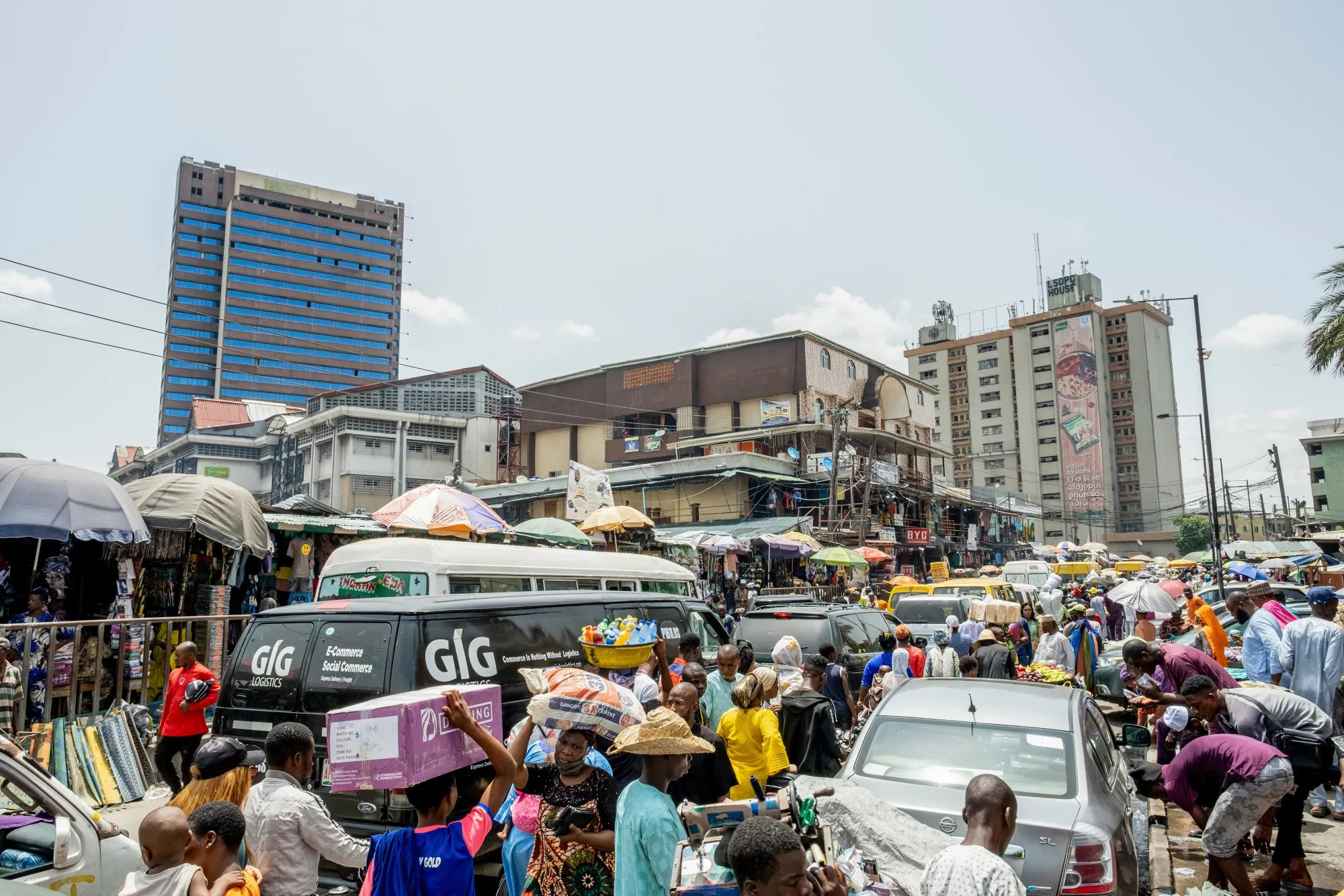
Income Inequality Persists in Nigeria Despite Rising Earnings
Rising income levels in Nigeria are not translating into improved living standards due to the country's struggle with inflation and currency weakness. According to a recent report by PiggyVest, a savings platform, the share of Nigerians earning above ₦1 million ($723.26) monthly has increased to 5% in 2025 from 2% in 2024. This growth in higher earnings is not keeping pace with the rising cost of living, leaving many households financially strained despite nominal gains.
The report, which surveyed over 25,000 Nigerians, shows that the middle-income brackets, people earning between ₦250,000 ($180.82) and ₦499,999 ($361.63), rose to 10%, and the ₦100,000 ($72.33) to ₦249,999 ($180.81) band increased to 23%. However, nearly three in five Nigerians still report earning below ₦100,000 ($72.33) monthly or having no income at all.
Nigeria's median monthly income stands at about ₦200,225 ($146.55), but with inflation peaking above 33% in 2024 and still at 15.06% as of February 2026, those earnings buy significantly less. The pressure is uneven across demographics, with Gen Z Nigerians being the most likely to earn below ₦100,000 ($72.33) or have no income.
Food inflation remains a significant concern, with food now dominating monthly spending for most Nigerians (72%). The report highlights the need for income diversification, as nearly two-thirds of working Nigerians still rely on a single source of income, leaving them more exposed to economic shocks.
💡 NaijaBuzz TakeThe stark reality of income inequality in Nigeria is a stark reminder of the country's economic challenges. As the cost of living continues to rise, it is clear that higher earnings are not translating into improved living standards for many Nigerians. The need for income diversification and more effective management of inflation cannot be overstated.