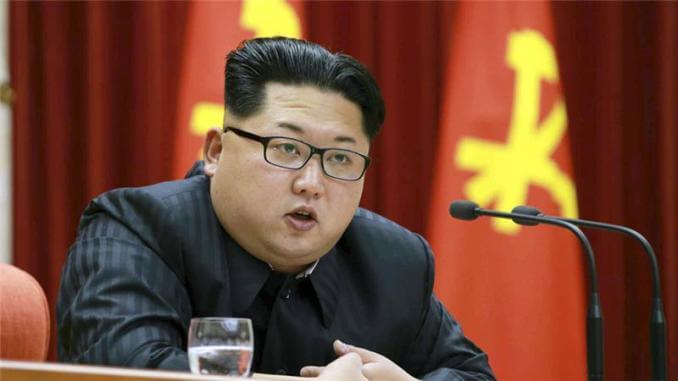
North Korea's leader, Kim Jong Un, has declared that his country's status as a nuclear-armed state is irreversible. He made this assertion during a parliamentary session, where he outlined policy priorities and warned South Korea that it would be treated as the most hostile state.
Kim emphasized the importance of expanding North Korea's "self-defensive nuclear deterrent" for both national security and regional stability. He rejected any possibility of nuclear disarmament in exchange for economic incentives or security guarantees, citing the country's successful strategy of maintaining nuclear capability alongside economic development.
According to Kim, nuclear weapons have helped deter war and enabled North Korea to redirect resources toward economic growth, infrastructure development, and improving living standards. He also accused the United States and its allies of destabilizing the region through the deployment of strategic military assets near the Korean Peninsula.
Kim's comments signal a continued hardening of Pyongyang's stance toward Seoul, particularly after abandoning longstanding policies aimed at peaceful reunification. Analysts note that recent conflicts have reinforced Pyongyang's long-held belief that nuclear weapons are necessary to deter external intervention and ensure regime survival.
The North Korean leader's stance on nuclear deterrence is a stark reminder of the country's pursuit of military might over economic development. By designating South Korea as its most hostile state, Kim Jong Un has effectively escalated tensions on the Korean Peninsula. This shift in rhetoric has significant implications for regional stability and global security. The international community must now confront the reality of a nuclear-armed North Korea, which poses a threat not only to its neighbors but also to global peace.