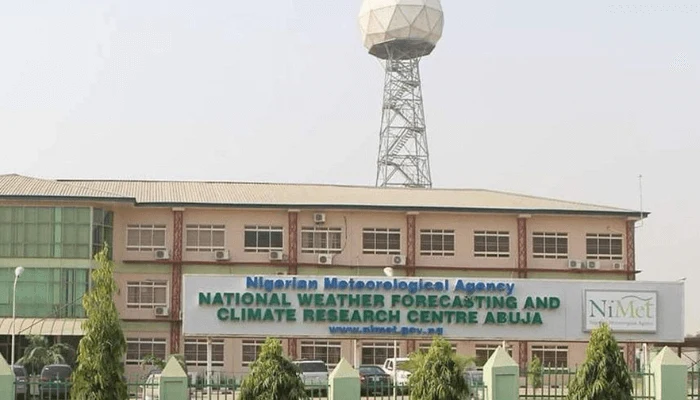
The Nigerian Meteorological Agency (NiMet) and the Central Bank of Nigeria (CBN) have signed a Memorandum of Understanding on data sharing to improve economic forecasting and policymaking. The agreement was signed on Wednesday at the CBN headquarters in Abuja by NiMet's Director General, Charles Anosike, and CBN Deputy Governor Muhammad Sani Abdullahi, representing the Economic Policy Directorate.
Anosike said the collaboration would integrate weather and climate data into economic research, particularly in agriculture, energy, and transportation. He cited extreme weather as a growing threat to agricultural productivity and food security, stressing that timely meteorological information supports informed decision-making. The partnership supports the Renewed Hope Agenda of President Bola Ahmed Tinubu, which includes cultivating 10 million hectares of land and distributing mechanised farming equipment.
Anosike referenced the World Bank's 2026 report, stating that over 87 million people face hunger in East and Southern Africa, and 52 million in West and Central Africa due to extreme weather. He also mentioned the 2026 Berkeley Earth Report, which projected that 2026 could rank among the four warmest years on record, affecting global agricultural and energy markets.
Abdullahi described the MoU as a milestone in institutional collaboration, noting that credible, timely data are vital for policy in a complex economic environment. He explained that the CBN's Economic Policy Directorate depends on accurate meteorological data for inflation monitoring, agricultural analysis, and economic advisory roles. The partnership aims to strengthen national data systems and support evidence-based economic policies.
Charles Anosike cites global climate reports to justify a data deal, yet Nigeria's own weather infrastructure remains underfunded and inconsistent. If NiMet's data is critical for CBN policy, then unreliable local measurements could already be distorting economic forecasts. This partnership assumes data quality that past outages and equipment failures suggest may not exist. Without fixing core operational gaps, the MoU risks becoming a paper exercise in policy confidence.
💡 NaijaBuzz Take is AI-assisted editorial opinion, not established fact. Full disclaimer →