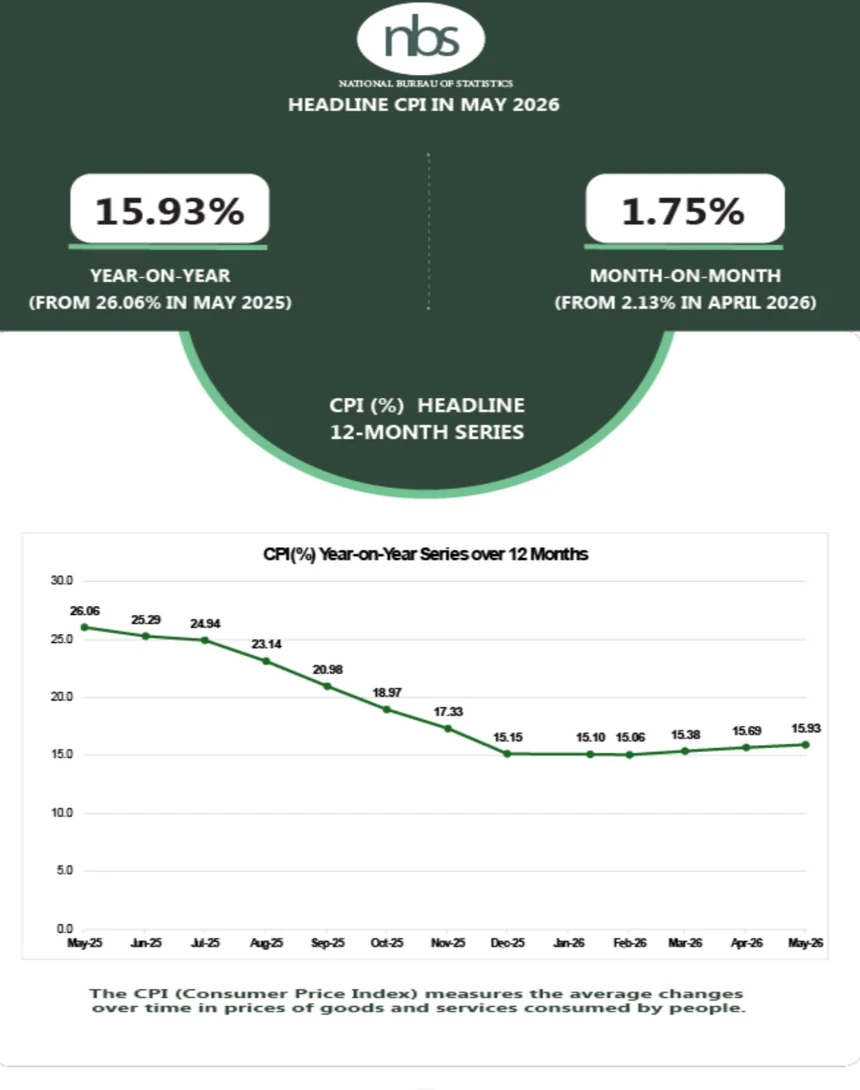
Nigeria's headline inflation rate increased to 15.93% in May 2026, up from 15.69% in April, according to the National Bureau of Statistics (NBS). The 0.24 percentage point rise on a year-on-year basis reflects continued upward pressure on prices, though the pace of increase slowed compared to earlier months. Month-on-month inflation declined to 1.75% in May from 2.13% in April, suggesting a moderation in the rate at which prices are rising across the economy.
Food inflation remained a key driver, reaching 16.96% year-on-year in May 2026, down from 24.55% in May 2025. On a month-on-month basis, food inflation eased to 2.98% from 3.63% in April. The NBS attributed the changes to price movements in essential food items including fresh onions, maize, cassava flour, yam tubers, plantain, fresh tomatoes and cowpea. The average annual food inflation for the 12 months ending May 2026 stood at 16.99%, a sharp drop from 33.21% recorded in May 2025.
Urban inflation was higher than rural, at 16.07% year-on-year, with month-on-month inflation rising to 1.99% from 1.86% in April. The 12-month average urban inflation rate was 18.27%, down from 32.55% in May 2025. In rural areas, year-on-year inflation was 15.60%, while month-on-month inflation fell sharply to 1.17% in May from 2.80% in April. The 12-month average rural inflation rate was 18.19%, compared to 28.36% in the same period of 2025.
The NBS noted that while prices are still rising, the overall trend indicates a gradual easing of inflationary pressures compared to the peak levels observed in 2025.
The National Bureau of Statistics reports slower price increases, yet inflation remains above 15%, meaning households still face high daily costs. Food prices, though lower than 2025 peaks, continue to rise faster than general inflation, deepening strain on Nigerians' purchasing power. The gap between urban and rural inflation trends suggests city dwellers are bearing a heavier burden despite recent moderation. This sustained pressure undermines any narrative of meaningful economic relief for average Nigerians.
Editorial note: AI-assisted opinion, not established fact. Full disclaimer →


