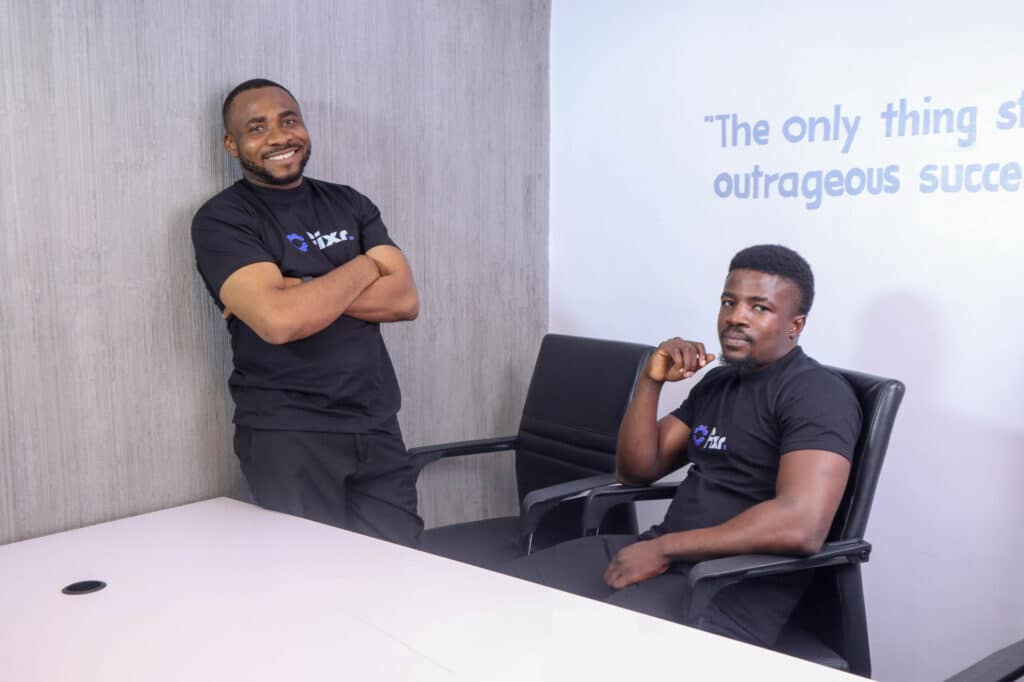
Fixr Technologies, a Lagos-based engineering services company, has achieved remarkable growth without external investment, processing close to ₦5 billion in gross merchandise value on its renewable energy financing arm alone. The company, co-founded by Ikechi Adolphus and Olamide Akangbe, has grown seven times year-over-year in its last full year and is on track to grow ten times that figure in 2026. This success is a result of Fixr's unconventional approach to service delivery, which diverges from the traditional marketplace model.
Unlike platforms that connect customers with technicians, Fixr operates as a contractor for engineering services. When a customer requests a service through Fixr, they have no direct relationship with the individual technician. Fixr handles assignment, part procurement, job reporting, customer communication, and payment from start to finish. This model allows Fixr to maintain control over its technicians and ensure consistent quality of service.
Fixr's decision to employ its technicians as full-time salaried employees has been a key factor in its success. This approach creates a fixed cost base that must be covered regardless of job volume, but it also gives Fixr the authority to direct where technicians go, how they work, and what happens when a job needs to be revisited. As a result, the rate of technicians circumventing the company to work with clients directly is remarkably low, at around 0.1 percent.
Fixr operates across seven engineering service categories, including HVAC, electrical, and solar installations. Its renewable energy financing product has been particularly successful, allowing customers to access solar on loan despite initial upfront costs.
Fixr's innovative approach to service delivery is a testament to the potential for African startups to disrupt traditional models and achieve success without external funding. By focusing on building a strong team and maintaining control over its operations, Fixr has created a sustainable business that is poised for continued growth. This model could serve as a blueprint for other African startups looking to build a strong foundation for long-term success.


