Japan Considers Sending Minesweepers to Strait of Hormuz After Iran Conflict Ceasefire
In a significant development, Japan's Foreign Minister Toshimitsu Motegi has hinted at the possibility of deploying the country's Self-Defence Forces for minesweeping operations in the Strait of Hormuz, a crucial waterway for global energy supplies. This move would be contingent on a ceasefire being reached in the ongoing conflict between Iran and the United States and Israel. Motegi's statement comes after a summit meeting in Washington where he discussed Japan's military capabilities with US President Donald Trump.
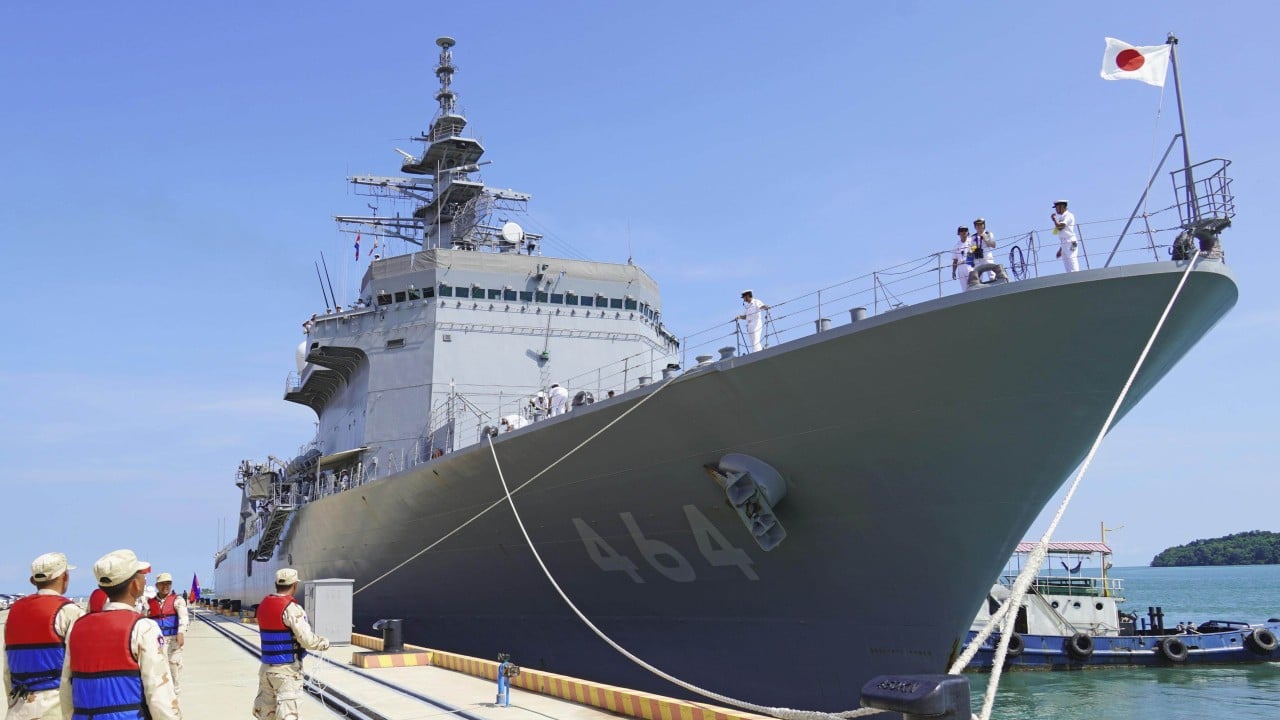
Japan's minesweeping technology is considered among the best in the world, and Motegi believes it could be a valuable asset in clearing potential naval mines that may obstruct shipping in the Strait of Hormuz. However, any deployment would require careful consideration of Japan's legal limits on sending its defence forces abroad. The country's top diplomat has clarified that no specific promises were made during the summit talks, and no issues were raised that would necessitate a reconsideration of Japan's military commitments.
Japan's reliance on the Middle East for over 90% of its crude oil imports makes the Strait of Hormuz a vital waterway for the country's energy security. The ongoing conflict in the region has escalated into a broader crisis with implications for global stability and energy supplies.
The conflict has yet to be resolved, and it remains to be seen whether a ceasefire will be reached. If it is, Japan may consider sending its minesweepers to the Strait of Hormuz to help clear any potential naval mines and ensure the safe passage of oil tankers.
Japan's potential deployment of minesweepers to the Strait of Hormuz highlights the growing complexity of global security issues. While the conflict between Iran and the US-Israeli forces has significant implications for regional stability and global energy supplies, it is unclear how Japan's involvement would impact the situation. However, one thing is certain: the Strait of Hormuz remains a critical waterway for global energy security, and any disruptions to its safe passage would have far-reaching consequences for the world economy.