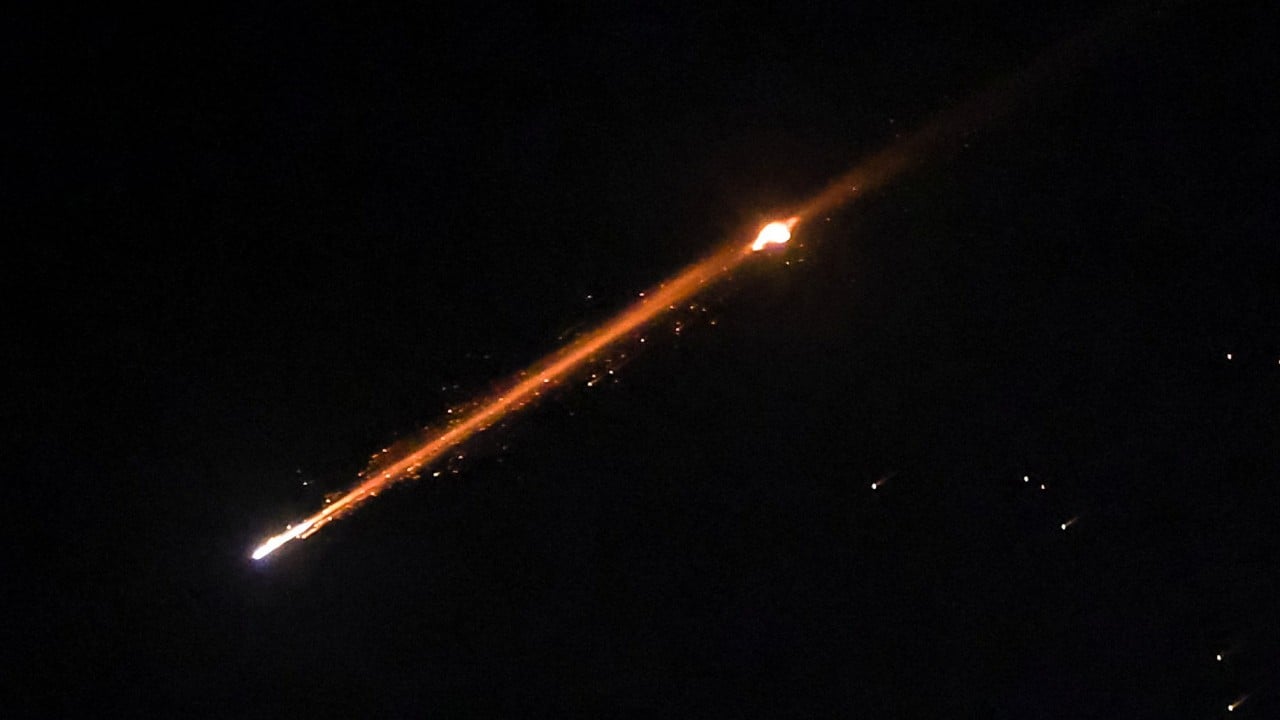
Air Strikes Fail to Deter Iran's Missile Capabilities
Iran's military has been severely weakened by nearly a month of relentless US and Israeli air strikes, but its vast missile arsenal remains a potent force. The country's long-range missiles, particularly those launched from hard-to-reach bases in eastern Iran, have become increasingly effective in targeting key locations. A recent attack on Israel injured over 100 people, with targets including the city of Dimona, home to the country's main nuclear research facility. Analysts believe that the Khorramshahr missiles, known for their long ranges and heavy payloads, were likely involved in the strike.
Despite estimates suggesting that the US and Israel have destroyed about two-thirds of Iran's missile launchers, the regime's ability to launch attacks around the Gulf has not been significantly diminished. In fact, more than 1,200 ballistic missiles and at least 3,300 Shahed cruise missiles have been fired so far. Experts note that the effectiveness of these attacks has increased in recent weeks, with a quarter of missiles reportedly getting through to their targets.
The persistence of Iran's missile capabilities poses a significant challenge to regional security, with implications for countries in the Gulf and beyond. As the situation continues to unfold, it remains to be seen how the international community will respond to this evolving threat.
Iran's ability to adapt and refine its missile capabilities in the face of intense air strikes raises concerns about the effectiveness of military action as a means of deterring aggression. The fact that Tehran has continued to launch attacks despite significant losses suggests that the regime is willing to absorb punishment in order to maintain its military capabilities. As the international community grapples with this challenge, it is clear that a more nuanced approach is needed to address the complex security dynamics at play in the region.


