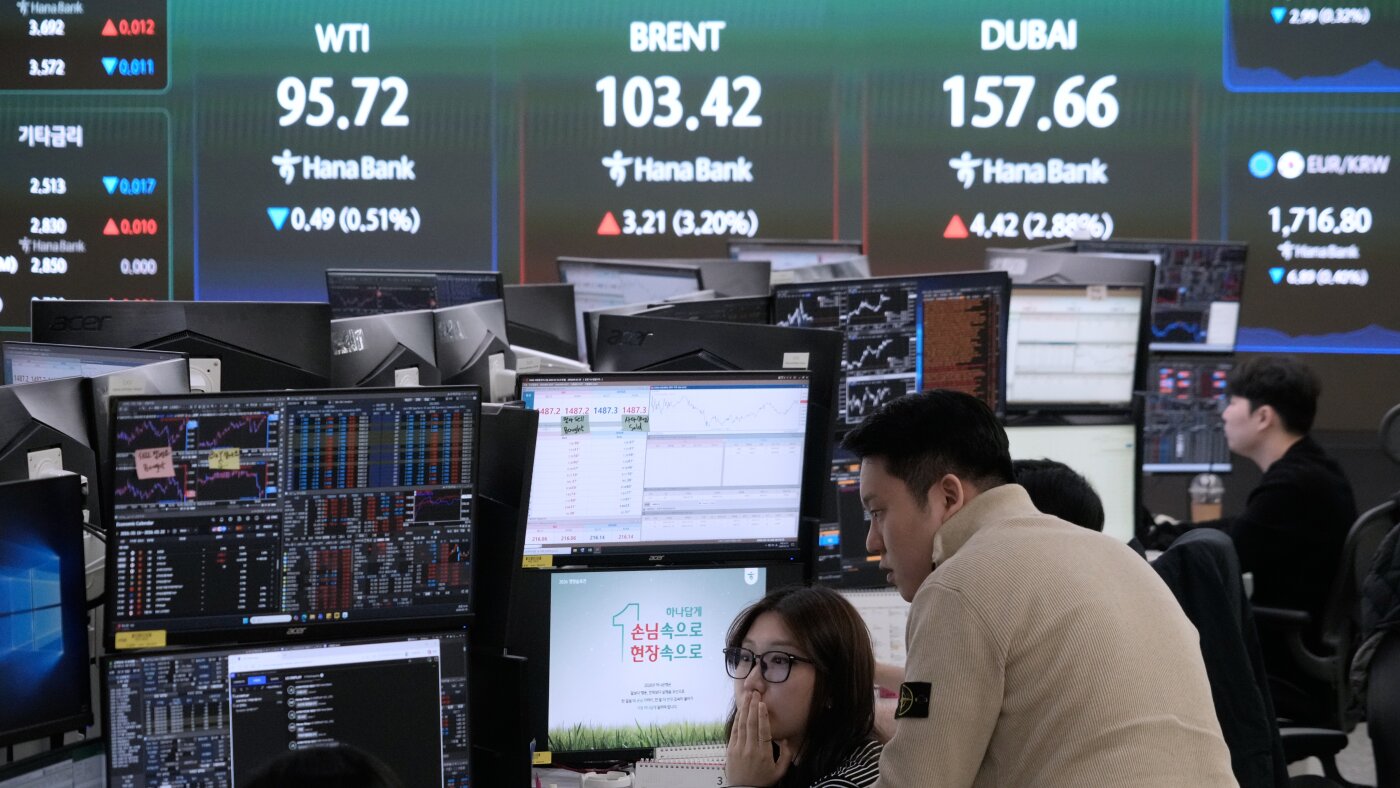
Oil Prices Remain Volatile Amid Uncertainty Over War Duration
Global oil prices have experienced significant fluctuations in recent days, reaching as high as $110 per barrel. Despite the Strait of Hormuz, a critical waterway for global oil trade, being blocked to tanker traffic for weeks, prices have not risen as sharply as expected. Analysts attribute this unusual trend to uncertainty surrounding the duration of the war. According to experts, the prolonged closure of the Strait of Hormuz could lead to a severe oil shortage, causing prices to skyrocket. However, if the conflict is resolved quickly, the market may not experience a significant price surge.
The situation is reminiscent of the thought experiment known as Schrödinger's cat, where a cat is simultaneously alive and dead until the box is opened. In this case, the world is either facing its worst oil crisis or things are relatively fine. The market is struggling to determine which reality is more likely, resulting in mixed signals and price volatility.
The war's outcome is crucial in determining the future of oil prices. A prolonged conflict could lead to a significant price increase, while a quick resolution might result in a more stable market. The uncertainty surrounding the war's duration has created a disconnect between the physical and commodity markets, leading to the current price fluctuations.
The international community is closely watching the situation, and the outcome will have far-reaching implications for the global economy.
The current oil price volatility is a stark reminder of the delicate balance between global supply and demand. The prolonged uncertainty surrounding the war's duration has created a perfect storm of mixed signals and price fluctuations. While the outcome of the conflict remains uncertain, one thing is clear: the world needs a swift resolution to this crisis to stabilize the oil market and prevent further economic disruption.