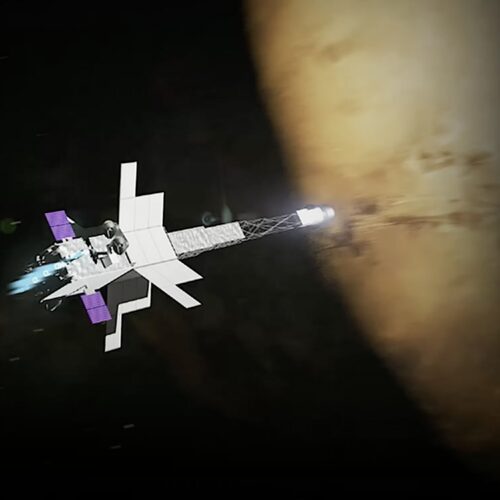
A major shift in NASA's space exploration strategy has been announced, with significant implications for the future of space travel. The space agency plans to repurpose a key component of its lunar space station, the Gateway, for a nuclear-electric propulsion demonstration in deep space. This decision comes after NASA spent nearly $4.5 billion on developing the Gateway outpost since its inception in 2019. The core module of the Gateway, known as the Power and Propulsion Element, is nearing completion and will be used for this new mission.
The repurposing of the Gateway's core module is expected to provide valuable insights into the use of nuclear-electric propulsion technology in deep space. This technology has the potential to enable more ambitious robotic missions beyond the Solar System, where solar energy is insufficient to generate electricity. Additionally, nuclear-powered rocket engines are more efficient than chemical rockets, making them a promising area of research for future space exploration.
The use of nuclear power and propulsion in space is not a new concept, with NASA having explored this technology in the past. However, the agency's latest mission aims to utilize nuclear-electric engines, which produce lower thrust but greater efficiency. This approach has the potential to revolutionize space travel and pave the way for more sustainable and efficient missions in the future.
💡 NaijaBuzz TakeNASA's decision to repurpose the Gateway's core module for a nuclear-electric propulsion demonstration is a significant step forward in the development of sustainable space travel. This technology has the potential to enable more ambitious robotic missions beyond the Solar System, and its success could pave the way for more efficient and sustainable space exploration. As the global space industry continues to evolve, it will be interesting to see how this technology is applied in future missions.


