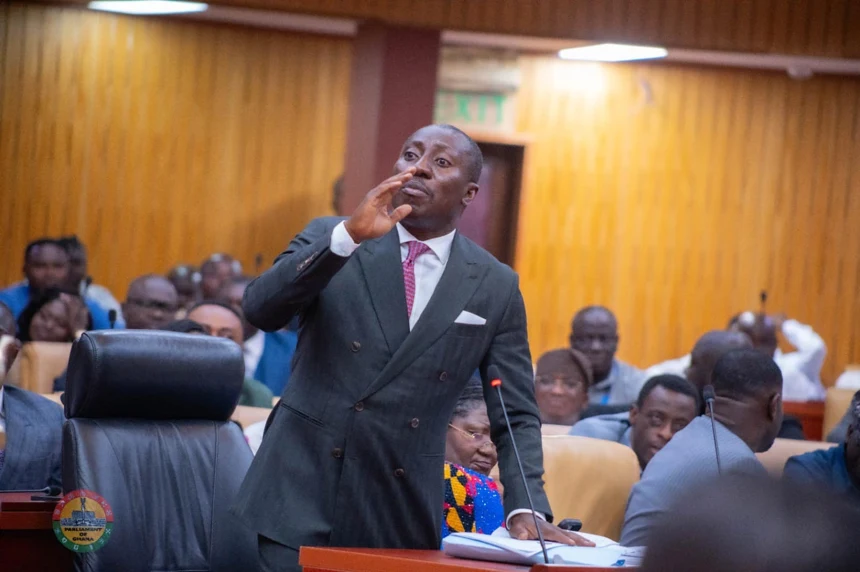
A joint research paper by the African Chamber of Content Producers (ACCP) and the Universal Peace Federation (UPF) has identified Ghana's culture of cross-party respect among parliamentary leaders as a key factor in the country's democratic stability. The study, titled "Institutionalizing a Strong and Responsible Opposition for Democratic Resilience in Africa: A Ghana Case Study (2025/2026 Review)", is available as a preprint on ResearchGate, Academia.edu, Zenodo, and SSRN, and has been submitted to international peer-reviewed journals. It draws on 400 citizen interviews across seven Ghanaian regions, showing that public attitudes toward political conflict are shaped by leadership behaviour. When opposition and ruling party leaders maintain civility, citizens see no justification for political violence.
Rev. Dr. Murphy T. Jackson, acting Secretary General of ACCP and co-author of the paper, stated: "The peace, development, and hospitality for which Ghana is celebrated are not accidental. They are the direct outcome of a political culture where leaders, even from opposing parties, treat each other with dignity." The study highlights the relationship between Minority Leader Hon. Alexander Afenyo-Markin and former Majority Leaders Hon. Cassiel Ato Forson, who told him, "Kwamina, learn from me and be good," and Hon. Mahama Ayariga, whom Afenyo-Markin praised for "diplomacy at an all-time best." It also notes the bond between Abu Jinapor (NPP) and John Jinapor (NDC), blood brothers in opposing parties who remain personally cordial.
David Adofo, ACCP Head of Research and lead researcher, cited a respondent who said: 'If leaders at the top can maintain such cordiality across party lines, then why should their followers fight?' The paper distinguishes a strong opposition from a responsible one, defining the latter as one that uses facts, research, and restraint to prioritise national unity. Recommendations include legally establishing the Office of the Leader of the Opposition with independent funding, guaranteed media access, and creation of an AU Parliamentary Research Service. Tegha King, UPF Ghana's Deputy Secretary General, said the findings position Ghana as a peace model. ACCP President Nana Dwomoh-Doyen Benjamin said the Ghanaian model, especially minority-majority leader relations, deserves replication.
The same paper praising Ghana's political leaders for promoting national cohesion through civility also records one telling exchange: a ruling party leader telling the opposition leader to "learn from me and be good," framing deference as a condition for respect. This undermines the study's claim of mutual dignity, revealing a power imbalance masked as mentorship. If Ghana's model is to be exported, African democracies must distinguish between performative cordiality and genuine equality of political voices. The risk is replicating a system where respect flows only from the ruling party downward.
Editorial note: AI-assisted opinion, not established fact. Full disclaimer →


