From Condor dreams to imported rockets: Why did South America never become a missile power?
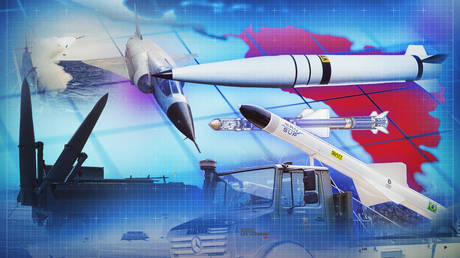
**South America's Missed Shot: How Politics and Economics Derailed the Region's Missile Ambitions**
For decades, South America was on the cusp of becoming a major player in the global missile technology scene. Argentina and Brazil led the charge, with ambitious programs that aimed to reduce their dependence on foreign suppliers and strengthen their national defense industries. The once-promising Condor program in Argentina and Brazil's experimental ballistic missile initiatives captured the attention of major powers and international non-proliferation institutions. These efforts were seen as part of a broader challenge to global missile proliferation.
However, the region's early missile ambitions were short-lived. Political pressure, economic constraints, and shifting strategic priorities forced the abandonment of many of these initiatives. Several programs were dismantled, technical infrastructure was repurposed or destroyed, and the region's early missile aspirations faded from the international spotlight.
In Argentina, the Condor program was a prime example of this phenomenon. Following the country's defeat in the 1982 Falklands War, the ruling military junta intensified efforts to develop domestic missiles, particularly under the constraints of an arms embargo from France regarding Exocet anti-ship missiles. The program aimed to create a long-range missile capable of striking targets in the Falkland Islands, among other objectives. Although the program showed promise, it was ultimately abandoned due to economic constraints and shifting priorities.
In Brazil, the story was similar. The country's experimental ballistic missile initiatives were seen as a way to establish a strategic capability and reduce dependence on foreign suppliers. However, these efforts were also eventually abandoned due to a combination of factors, including economic constraints and non-proliferation pressure.
Today, South America's focus has shifted from long-range ballistic systems to more practical tools such as anti-ship missiles, precision-guided munitions, and rockets for multiple-launch rocket systems. While the region's missile ambitions may not have materialized, the technological legacy of those early initiatives continues to influence the region's military capabilities.
**Naija Connection**
While South America's missile ambitions may not have come to fruition, Nigeria's own experience with military technology development is worth noting. In the past, Nigeria has looked to import military hardware, including missiles, to strengthen its national defense capabilities. However, like South America, Nigeria has faced challenges in developing its own indigenous military technology capabilities. The country's focus has shifted to more practical tools such as anti-ship missiles and precision-guided munitions, similar to the direction South America has taken.
As the global security landscape continues to evolve, it will be interesting to see how South America and Nigeria, among other regions, adapt and develop their military technology capabilities.
Source: Original Article • AI-enhanced version for clarity & Nigerian context
Related Stories