France treads 'a fine line between defensive and offensive’ in Middle East

Middle East war
President Emmanuel Macron has condemned the attacks on Iran by the United States and Israel as a violation of international law, while France deploys military forces to protect its interests in the region and defend its allies hit by Iranian reprisals – a balancing act that could prove to be difficult to maintain.
A woman sits amid the rubble of a building damaged during the US-Israeli air campaign in Tehran, Iran, on 12 March.
Advertising Read more
"The Europeans find themselves swept up in this,” Cyrille Bret, a geopolitical analyst and researcher at the Jacques-Delors Institute, told RFI.
“We have been put into a situation where, as with Ukraine, we are subject to decisions made in Washington without any say, and we will then be expected to pay, in one form or another, for the consequences of these operations.”
France has made it clear that it considers Iran’s retaliation a direct threat to its allies, as well as to military personnel and civilians stationed across the Gulf region.
“Our objective is to maintain a strictly defensive stance, standing up for the countries attacked by Iran in retaliation, to maintain our credibility and to contribute to regional de-escalation,” Macron said on Monday.
Last week, he announced he was dispatching the Charles de Gaulle aircraft carrier and other navy vessels to the Mediterranean and would deploy additional air defence units to Cyprus, after Iranian drones struck the British Royal Air Force base there.
MIlitary interests
France too has direct interests in the region, as it maintains a substantial permanent military presence.
“Of course, it's not on a par with the United States' deployment, which is much larger, but compared to Germany, Italy, Spain or even the UK, we maintain quite a few forces in the region,” says Guillaume Lagane, who has advised the French army and who teaches international relations at Sciences Po university in Paris.
He points to a large base in the United Arab Emirates, cooperation with Iraq, special forces in Syria, and hundreds of French soldiers deployed in the United Nations UNIFIL force in southern Lebanon.
“Some of these have already helped Gulf states to defend themselves against Iranian strikes and the ships that we are sending will strengthen that capacity,” he told RFI.
Listen to an interview with guillaume Lagane in the Spotlight on France podcast:
Spotlight on France, episode 141 © RFI
Beyond defence commitments, France has significant economic interests at stake.
“France is also interested in maintaining energy and trade coming from the Middle East, as some of the Middle East states are among the largest buyers of French products,” said Lagane.
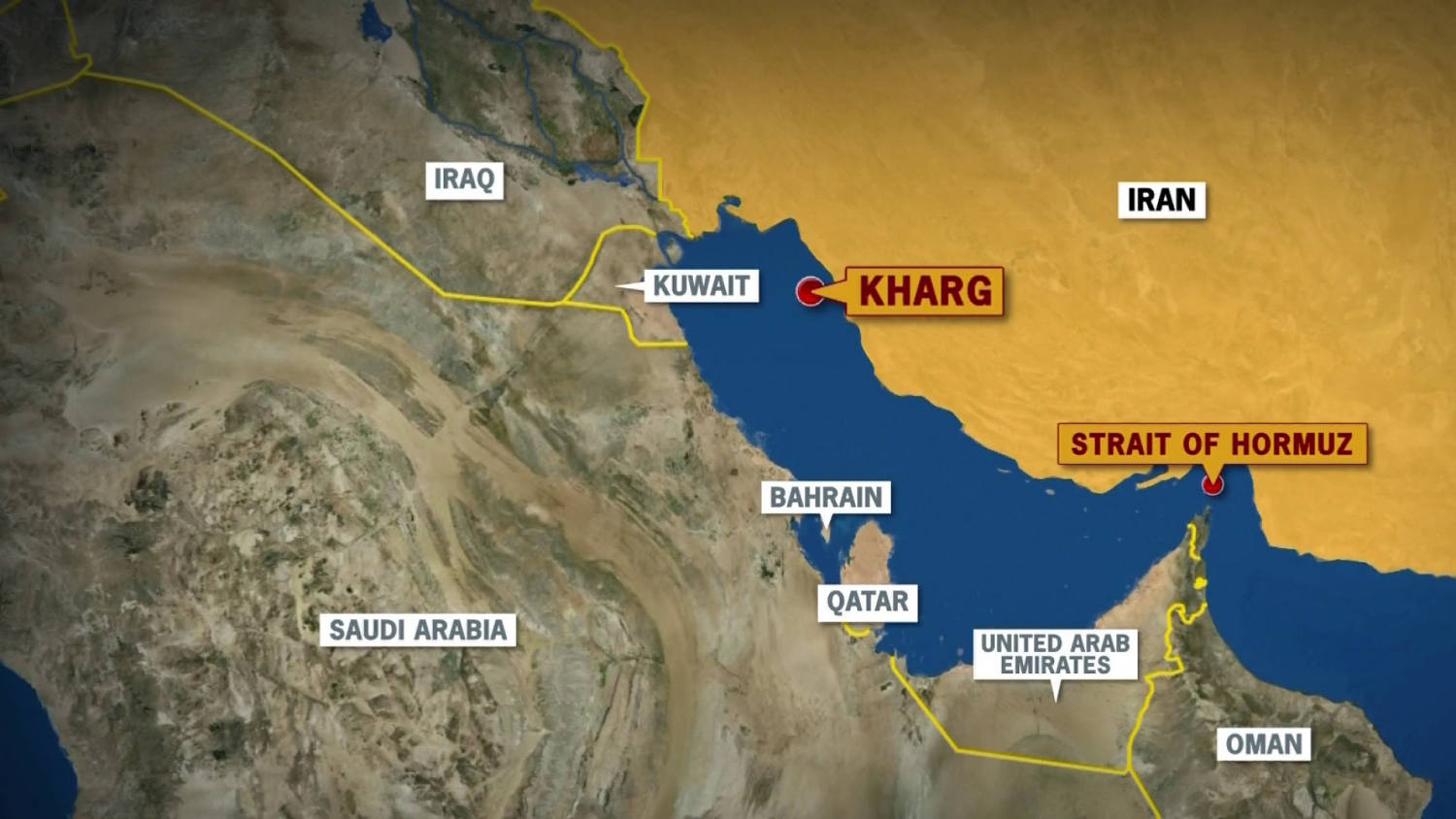
Oil prices have increased as a result of the conflict, as Iran has targeted oil installations in the UAE and Saudi Arabia, and is threatening shipping through the Strait of Hormuz, the narrow channel between Iran and Oman through which much of the world’s oil passes.
Macron on Monday said France and its allies were preparing a "defensive" mission to reopen the Strait.
With oil once again a weapon in the Middle East, is clean energy the key to peace?
Support for Lebanon
France has also been deploying humanitarian aid to Lebanon, which has been targeted by Israeli air strikes against the Iran-backed Hezbollah movement.
French historical ties with Lebanon run deep.
“France was the mandate power in the 1920s, and since then we have had a very strong relationship with Lebanon, where many of the people are French-speaking,” said Lagane.
“So we are very committed to maintaining security in Lebanon and the security of its population, whether it is against Israeli strikes or the presence of Hezbollah.”
Why France and the Middle East have such a deep and lingering past
France also has concerns closer to home.
“Let us not forget the not so distant history of the Islamic Republic of Iran, which has never shied away from state terrorism,” said Bret, pointing to a series of terrorist attacks in Paris in the mid-1980s by a group linked to Iran.
Two weeks into the war France remains on the defensive, however, according to Lagane: "There's a very fine line between defensive and offensive posture in the region."
He nonetheless believes that it would be politically difficult for France to become more directly involved.
“In France, this war is mostly seen through the lens of the Israel-Palestinian conflict, and there is an association between the war and the role of the US in the Middle East and globally,” he explains.
“France is keen to maintain independence, and not to be seen as aligned with US positions, a subject that has always been very sensitive for France.”
Listen to more on France's involvement in the Middle East war in the Spotlight on France podcast, episode 141, here.
Daily newsletterReceive essential international news every morning Subscribe
Source: Original Article • AI-enhanced version for clarity & Nigerian context
Related Stories