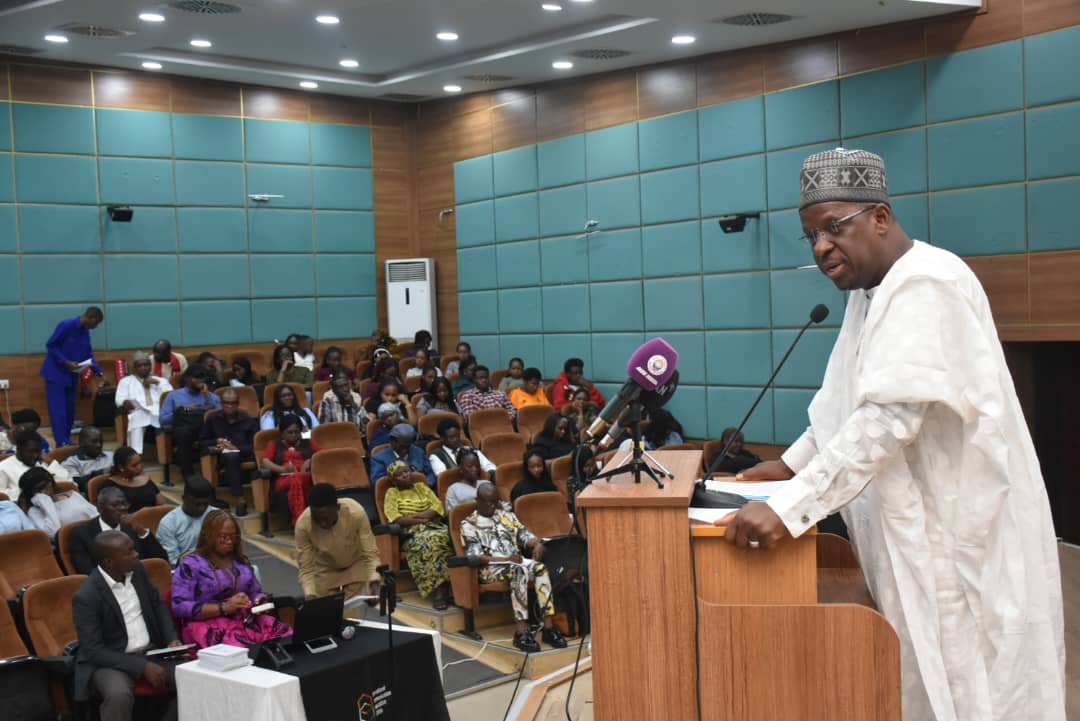
The Nigerian government has emphasized the need for public trust in information, citing the country's fragile governance, security, and national cohesion. The Minister of Information and National Orientation, Alhaji Mohammed Idris, made this point at a national conference in Abuja, where he noted that false narratives spread quickly, and facts are often contested. According to Idris, rebuilding trust requires communication anchored on truth, responsibility, and accountability among governments, media, academia, and civil society. He stressed the importance of Africa telling its own stories, highlighting resilience, innovation, culture, and progress, rather than relying on externally shaped narratives.
The minister highlighted Nigeria's vibrant media space as a platform for public discourse, but also emphasized the need for commitment to accuracy, fairness, and responsible communication practices. He noted that digital platforms have amplified Africa's voice globally, but also exposed societies to misinformation, disinformation, and declining trust in institutions. Idris warned of the risks associated with Artificial Intelligence and digital technologies, including bias, manipulation, and information control.
The Nigerian government is expected to take steps to address the challenges posed by digital technologies and misinformation. The conference, themed "Global Communication Shifts and Implications for Africa," is seen as a timely platform for discussing these issues and finding solutions.
The Nigerian government's emphasis on trust and accountability in communication is a welcome development, particularly in the face of rising misinformation and disinformation. By promoting Africa-driven narratives and responsible communication practices, the government can help to build trust and promote national cohesion. However, this will require a sustained effort to address the root causes of misinformation and to invest in education and policy frameworks that protect African values and realities.